Booking a Visit
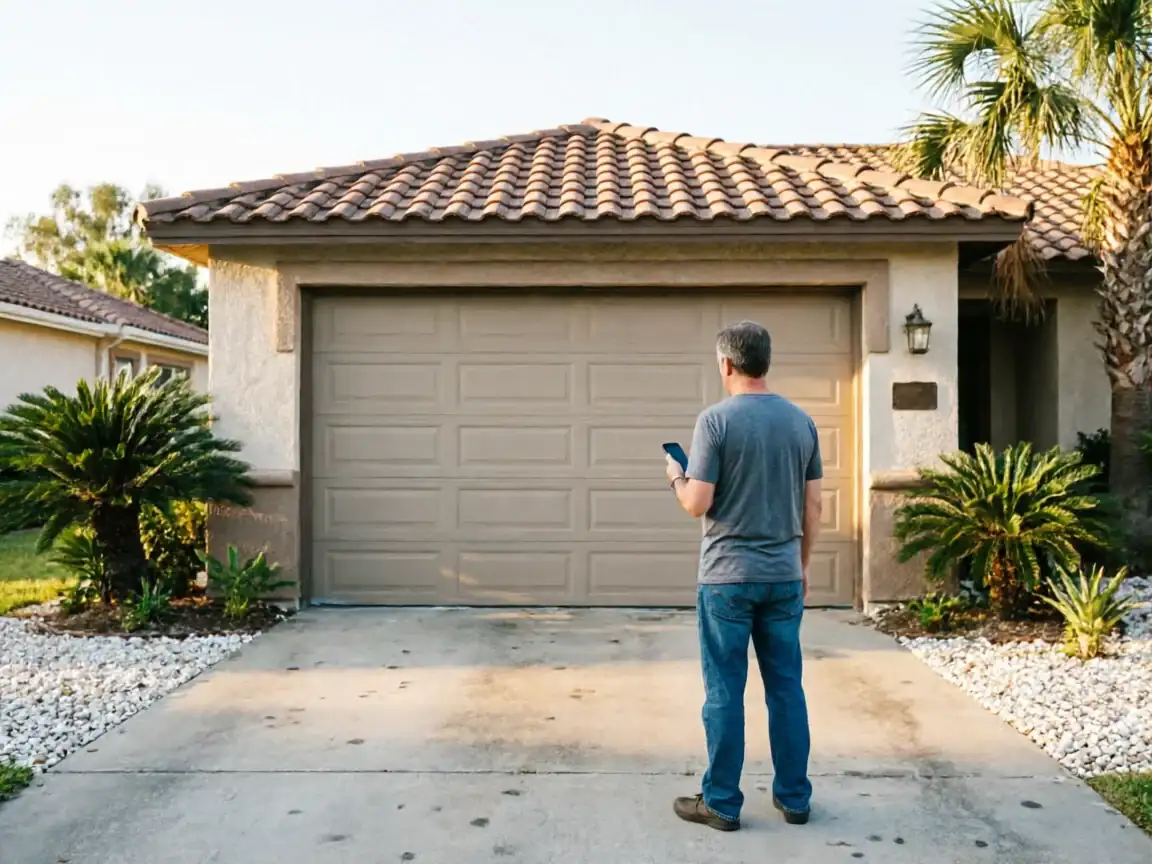
Call when the door won't move, won't stay up, or came off track - don't keep hitting the opener button, since that's how a cable jumps the drum or a panel bends further than it needs to. Tell us what you see: a gap in the spring overhead, a cable hanging loose, the door stuck a foot off the slab. That tells the tech what to load on the truck before he leaves, which saves a second trip.
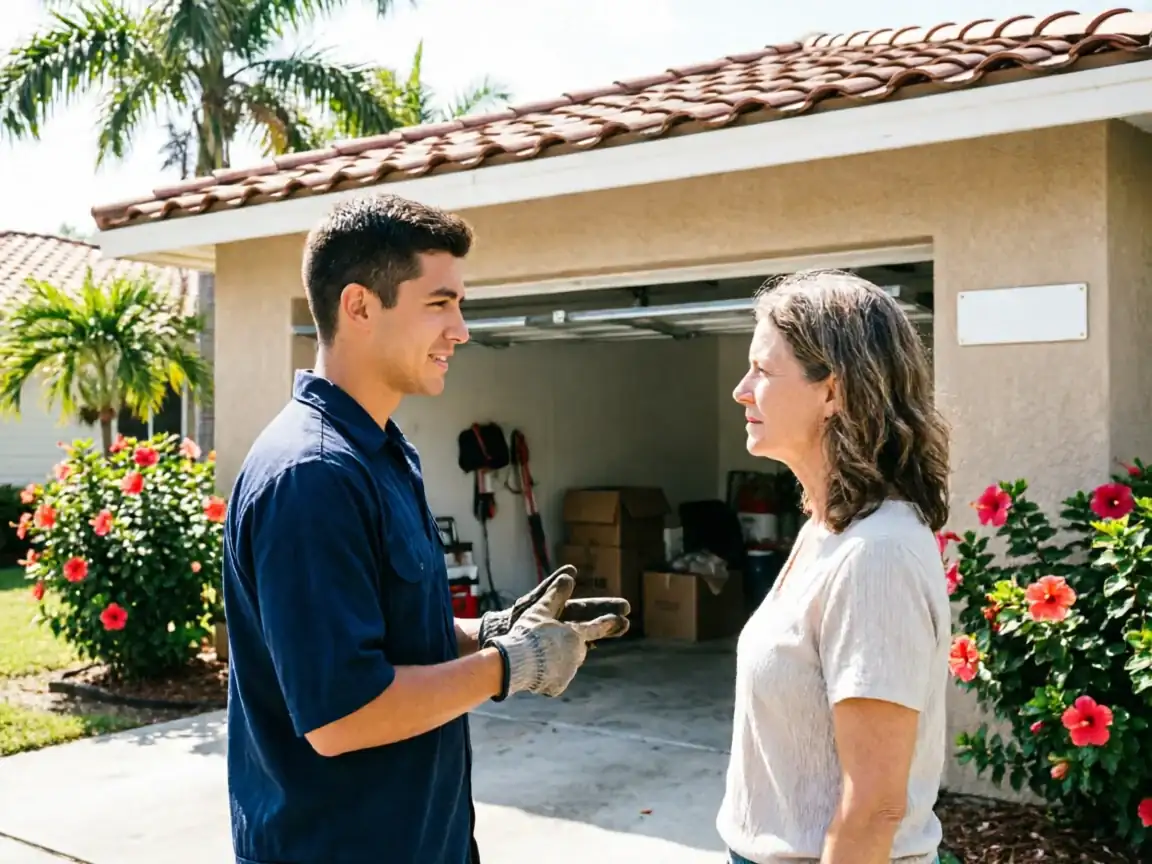
We work across the service area that includes Boynton Beach and the nearby towns - Ocean Ridge, Golf, Manalapan, Lantana, and out past Atlantis and Lake Worth Beach. If you're near the coast or further inland toward Royal Palm Beach, say so when you call; it affects which truck is closest.
One limitation worth saying plainly: if the fix needs a part we don't stock - certain opener boards, some older extension-spring kits - we'll tell you on site rather than guess. Most jobs don't need that, but some do, and we'd rather say it up front than promise a same-visit fix we can't deliver.
What It Costs
We don't post a flat number for emergency spring or cable repair, because the real cost depends on what's actually broken and what's on the door - a single torsion spring on a standard door is a different job than two springs plus a bent track on a heavier insulated panel. What we can tell you is that a tech diagnoses on site before any work starts, so you know the number before we touch anything.
Given the housing stock in this service area - most of it built between 1965 and 2005, with a lot of original hardware still in place - the most common emergency call is a broken spring on original or near-original gear, not a full system failure. That keeps a lot of these calls on the simpler end of the range, but we won't quote a price over the phone without seeing the door.
If a repair isn't worth it - old rotted panels, an opener older than the house's second roof - we'll say that instead of patching something that'll fail again in a year.
The Symptom
The call usually sounds the same
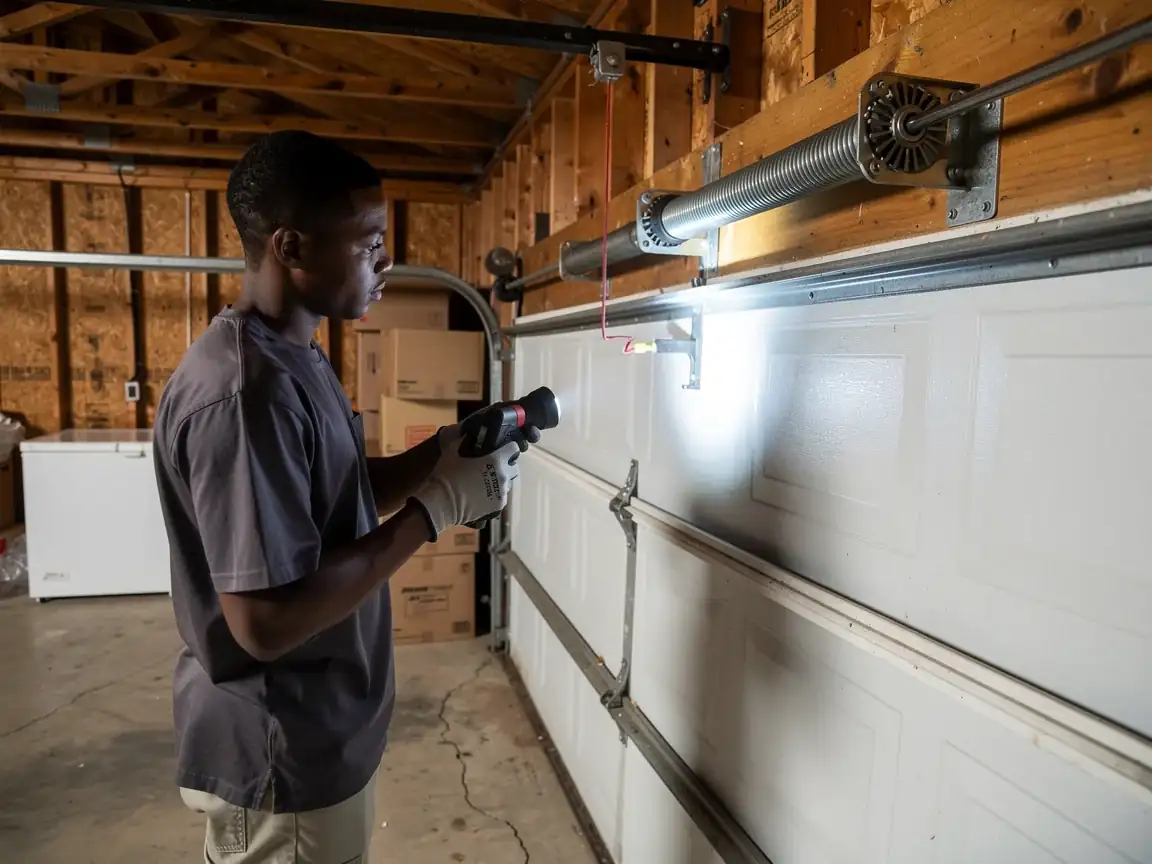
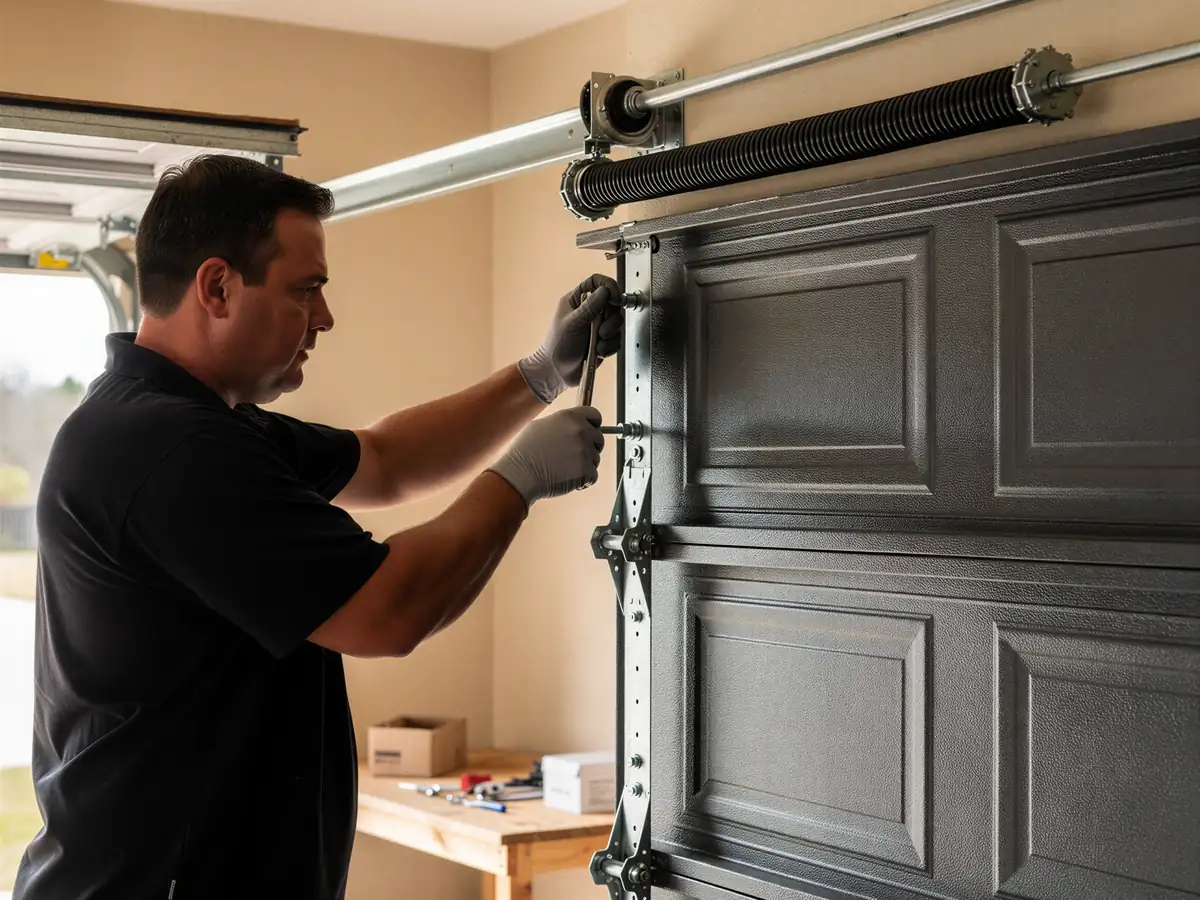
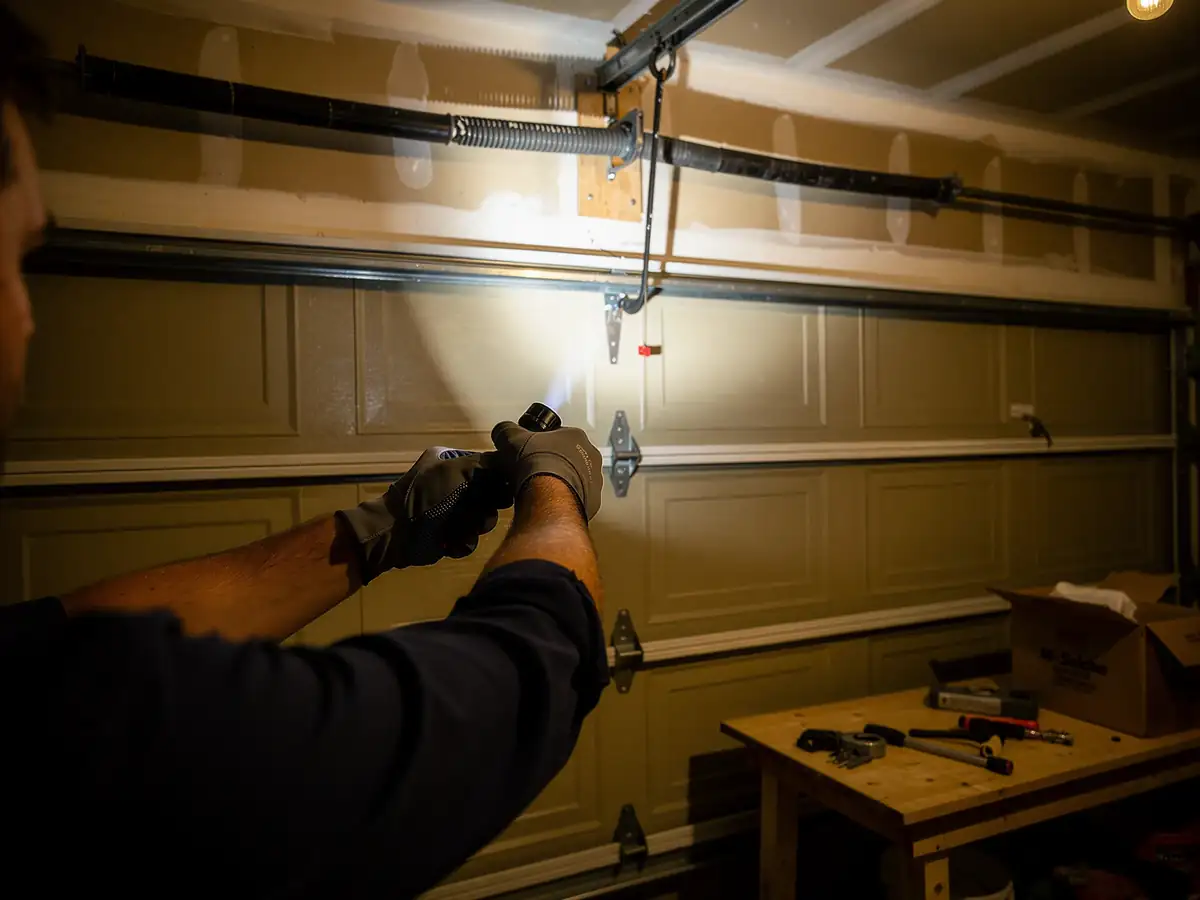
The door was fine yesterday, and this morning it won't lift, or it lifts a few inches and stops, or there's a loud bang from the garage followed by the door refusing to move at all. That bang is almost always a torsion spring letting go - the coil that's been doing the lifting work for years finally gives out, usually without warning.
Sometimes it's quieter
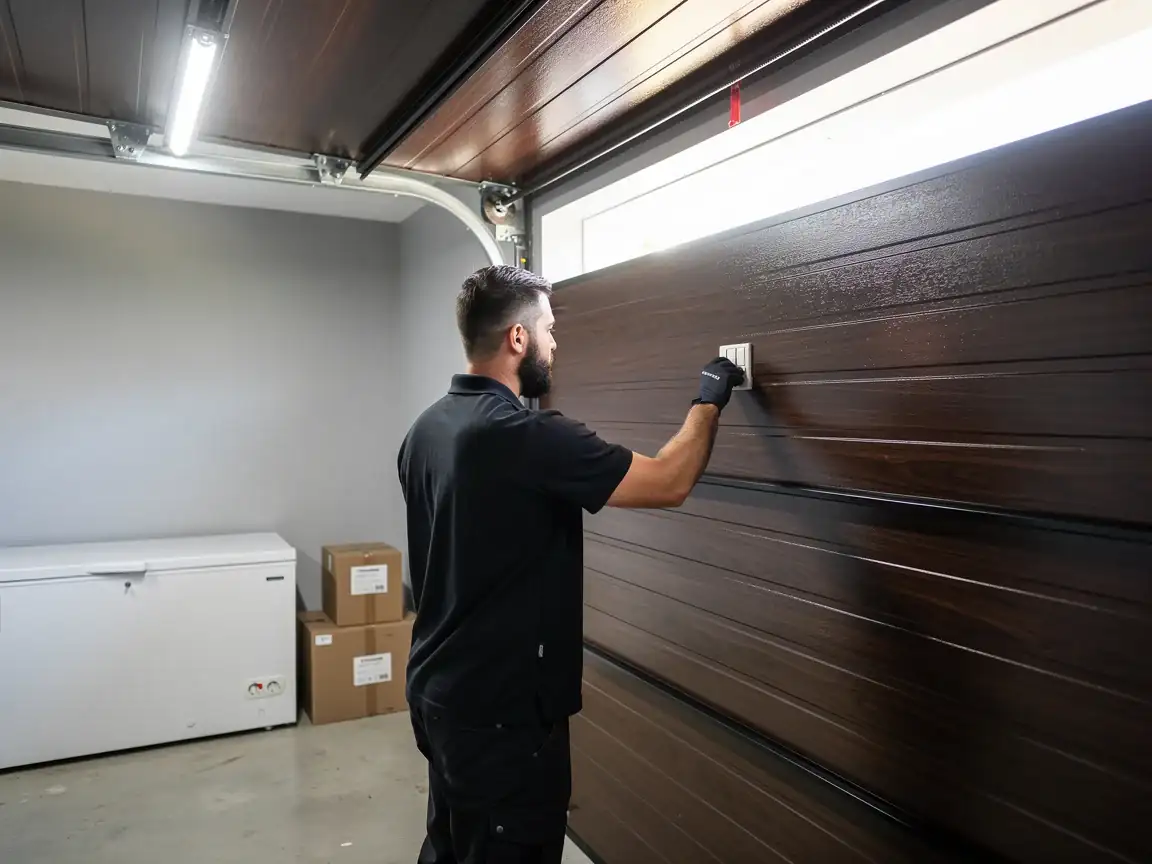
The door looks like it's trying, the opener motor hums, but nothing moves, or one side of the door hangs lower than the other. That's often a cable off the drum, which can happen on its own or right after a spring failure, since the two share the load.
If the door came off its tracks
Or a panel is visibly bent or caved in, don't force it - that's a job for a tech, not a crowbar. We see this pattern across the service area regularly enough that it's the single most common after-hours call we get, not an unusual event.
Why It Happens Here
This part of the service area - 20 named neighborhoods, mostly built out in the 1960s and 70s with later infill running the housing stock's median to 1977 - still runs a lot of original or near-original torsion spring hardware. Springs are rated in cycles, and a 45-to-50-year-old spring has usually seen more open-and-close cycles than it was built for, whether or not the house around it looks freshly updated.
The climate here doesn't help in the way people expect. There's no hard freeze that makes steel brittle and obviously vulnerable, so there's no seasonal warning sign the way there might be up north. Instead, the mild, humid, salt-adjacent air along this stretch of coast works on the spring's coating and the exposed coil slowly, year-round, until the metal fatigues and lets go - often on an ordinary afternoon, not during any kind of weather event.
With 57,714 owner-occupied houses among roughly 149,301 households across the area, and household income here running well above the national median, most of these homes could replace aging hardware proactively. Few do, because a spring gives no symptom until the day it doesn't.