Booking a Visit
We cover the full stretch of this service area, not just one zip code. That runs from Ocean Ridge and Golf, both about two miles out, through Manalapan and Lantana at four miles, Atlantis at five, out to Lake Worth Beach, Palm Springs, and Greenacres, and as far as Lake Park and Riviera Beach near the twenty-mile mark. Wherever your house sits in that range, the visit works the same way: we look at the opener you have, the track and spring setup it's paired with, and whether the house still has its original drive unit or a replacement from along the way.
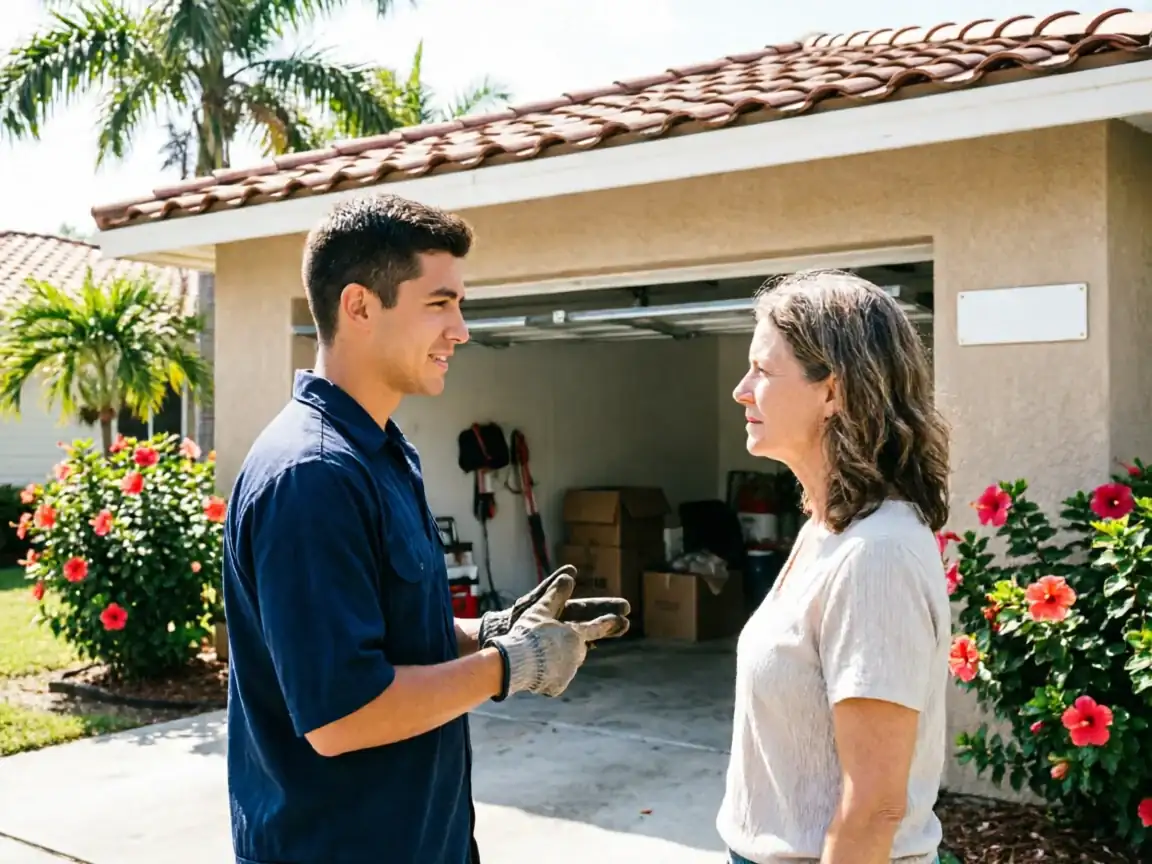
Most opener jobs get scheduled for a single visit. If the unit is a straightforward swap - same rail length, same mounting points - that's usually all it takes. If the ceiling bracket, header, or wiring needs rework because the house has been modified since it was built, we'll tell you that on-site before any work starts, not after. We'd rather walk you through what we're seeing on the door than guess at it over the phone, so a quick description of the symptom when you call helps us bring the right opener instead of a guess.
Use the link below to reach us and get a visit on the calendar.
What It Costs
We're not going to put a number here that doesn't hold up once we're standing in your garage. Opener cost depends on the drive type - chain, belt, or screw - the horsepower the door actually needs, and whether your existing rail, safety sensors, and wiring can be reused or need replacing along with the motor. A straight swap onto working hardware costs less than a job where the bracket, header, or wiring has to be redone because the house has settled or been modified over the decades.
What we can tell you is how we price it: we look at the door, the opener, and the mounting before we quote anything, and we quote before we start, not after. If a repair would cost close to what a new opener runs, we'll say so rather than patch something that's going to fail again in a year. That's the honest limitation here - we don't do ballpark pricing over the phone for opener installs, because a unit, a drive type, and a mounting job are three different variables, and guessing at any of them before we've seen the garage does you no favors.
If budget is the main question, tell us that when you call and we'll walk through the options that fit it, rather than defaulting to whatever we have on the truck.
The Symptom
The calls we get on openers tend to split into a few patterns
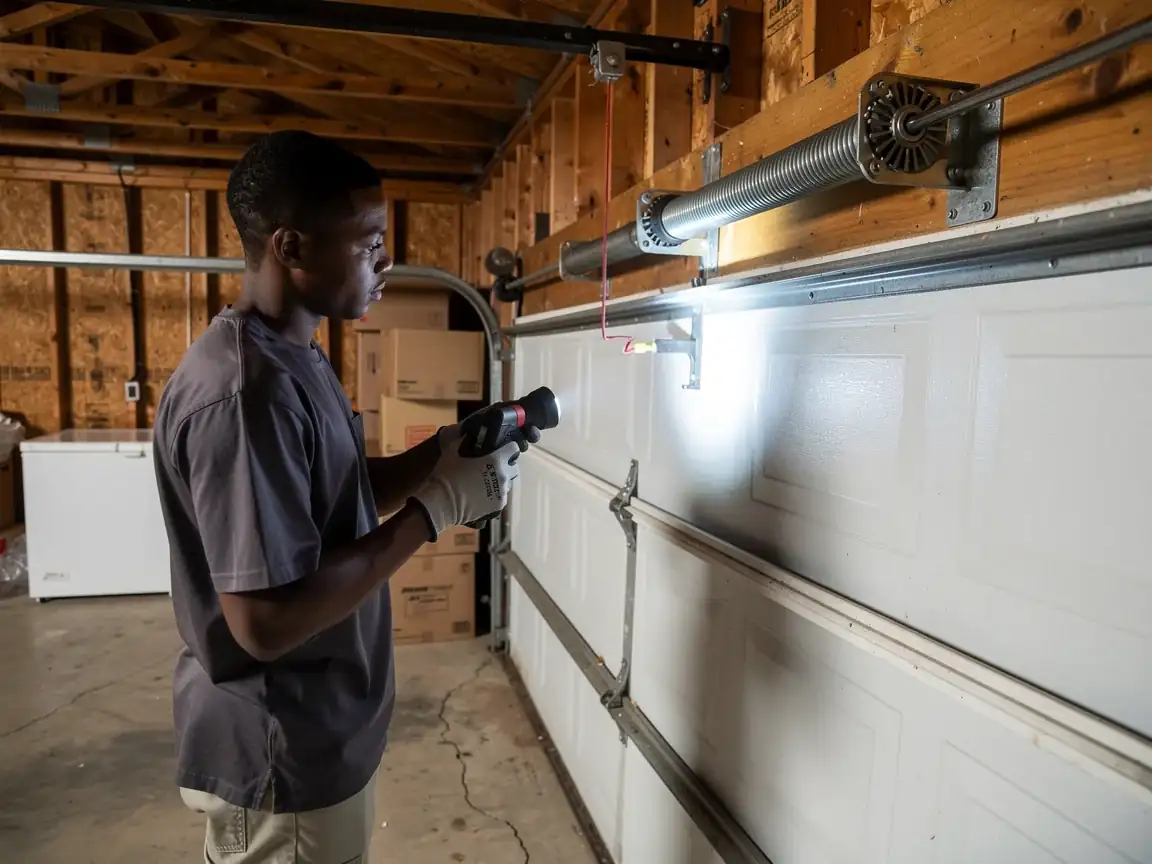
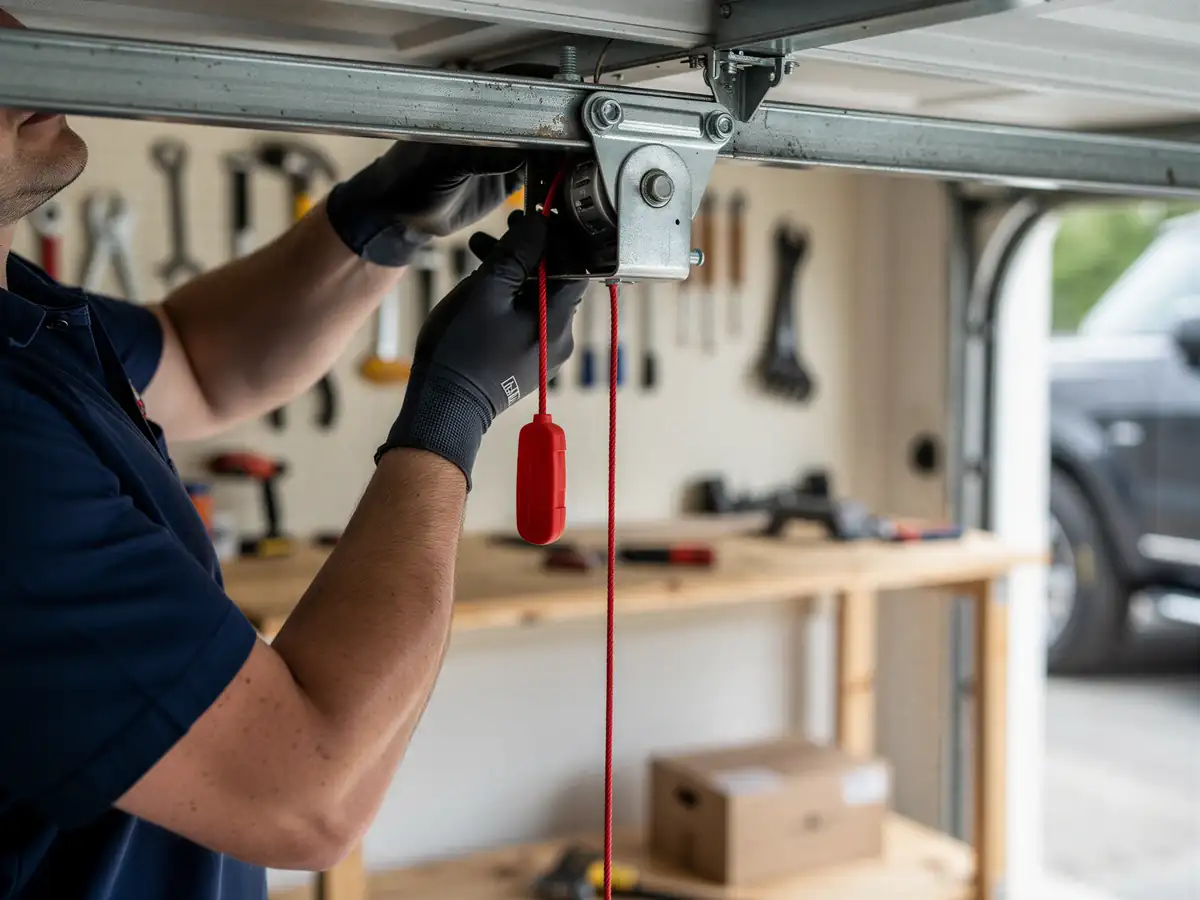
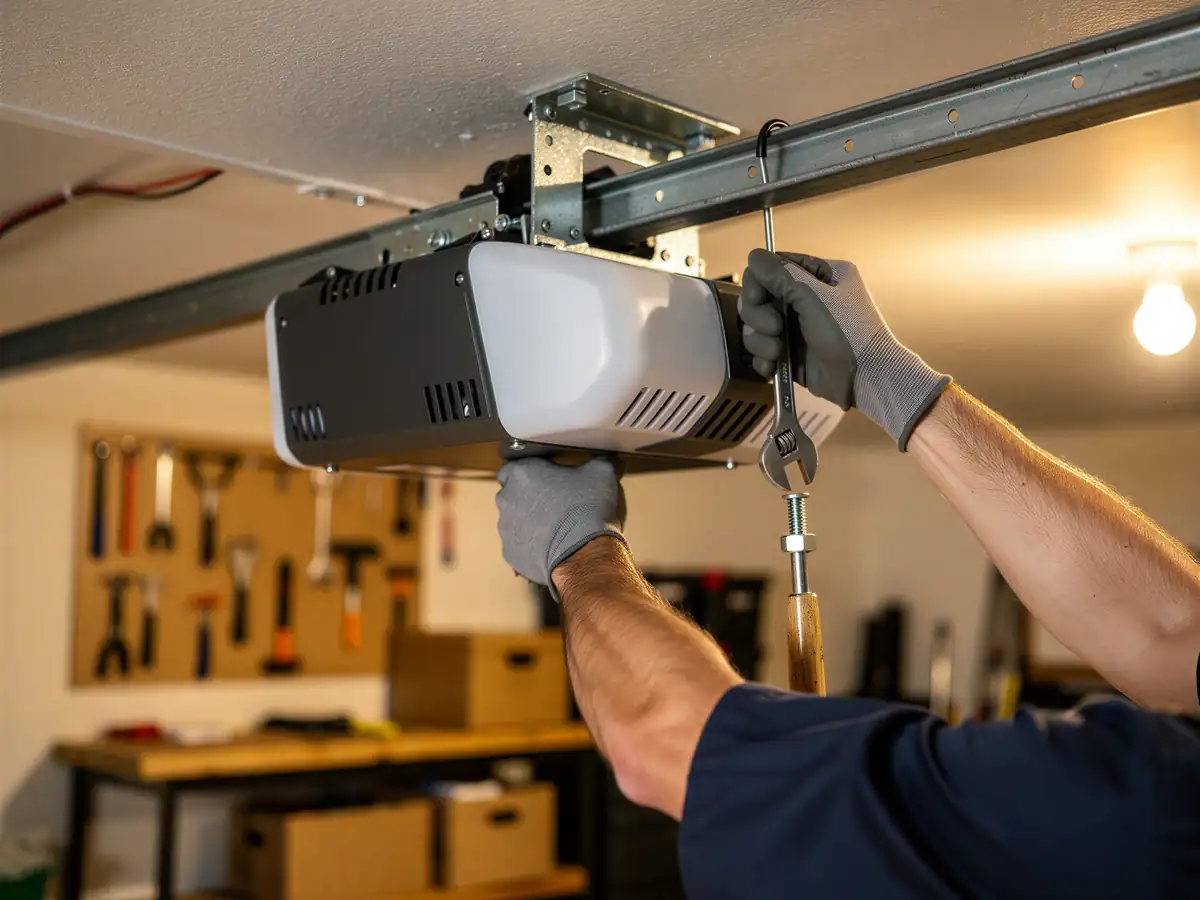
The opener runs but the door doesn't move, which is usually a stripped gear or a worn drive belt rather than the motor itself. The opener reverses partway up or down for no clear reason, which is often a sensor or limit setting rather than the unit failing outright. Or the opener simply doesn't respond at all - no light, no hum, nothing - which points to the circuit board or the power supply, not the drive mechanism.
Age matters more than people expect
An opener installed when a house was built in the 1970s or 1980s has had thirty-plus years of use, and most of these units were never designed to last that long in the first place. By the time it fails outright, the gear, the board, and the safety sensors have usually all been running past their intended service life together, which is part of why a repair on a unit that old often just delays the same call by a few months.
If your opener is original to a house built decades ago and it's starting to act up
That's less a one-off problem and more the unit reaching the end of what it was built for.
Why It Happens Here
Most of the houses across this service area were built between 1965 and 2005, with the median landing around 1977, and the housing stock across the roughly 20 neighborhoods we cover skews heavily toward 1960s and 70s construction. A garage opener installed when one of these houses went up is now decades past its expected life, and a lot of them are still the original builder-grade chain-drive units that came with the house rather than anything upgraded since.
The climate here is mild and temperate rather than harsh, so you don't get the hard freeze-thaw cycles that crack housings up north. But year-round humidity still does its own kind of damage - it breaks down chain and belt lubrication faster than a dry climate would, and it corrodes circuit board contacts and relay switches over time, which is a slower failure but a real one. Combine that with housing stock this old, and opener replacement is one of the more common calls across the area's roughly 149,301 households and 57,714 owner-occupied houses.
With a median household income of $92,325 across the service area, most owners here choose to replace an aging opener outright with a mid-range or better unit rather than keep repairing a thirty- or forty-year-old motor piece by piece. That's usually the more practical call once the original unit starts showing its age.