What the Fix Involves
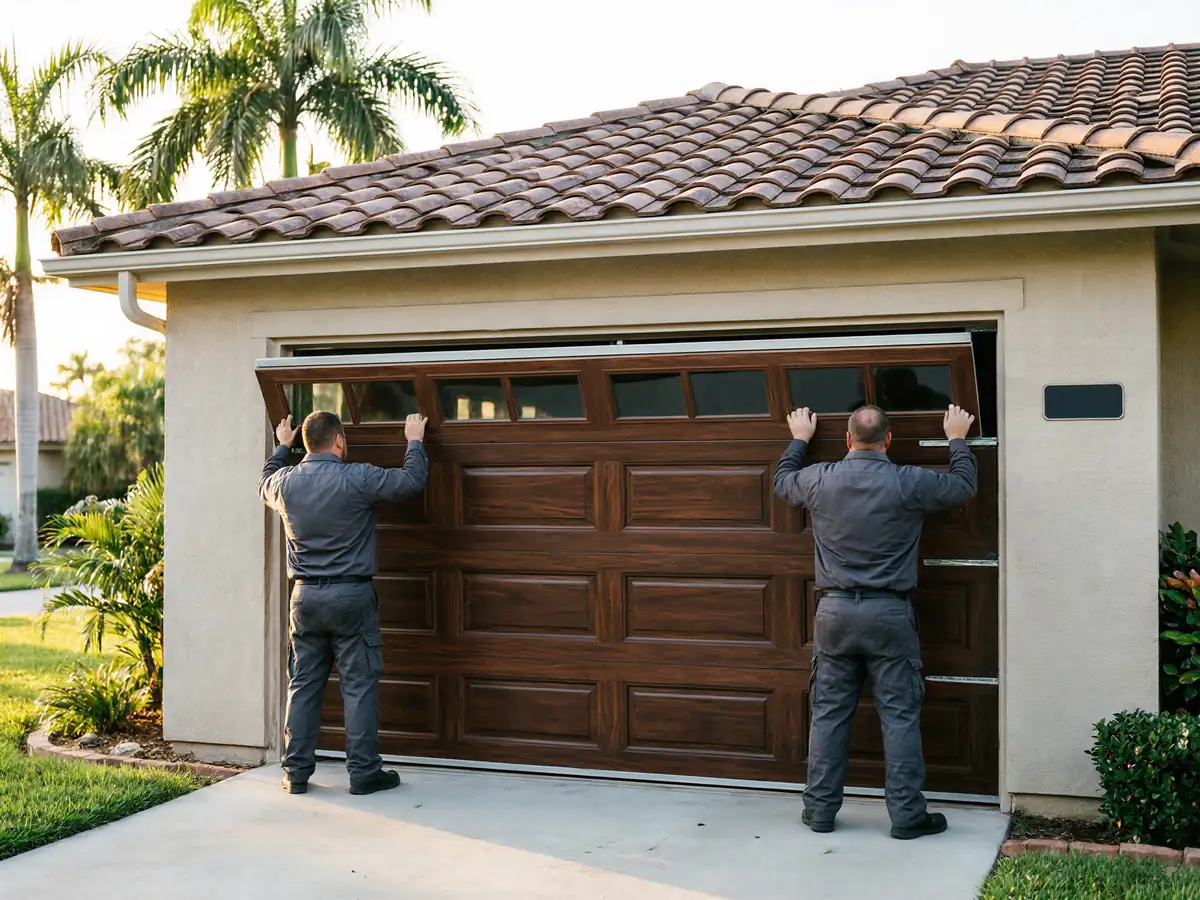
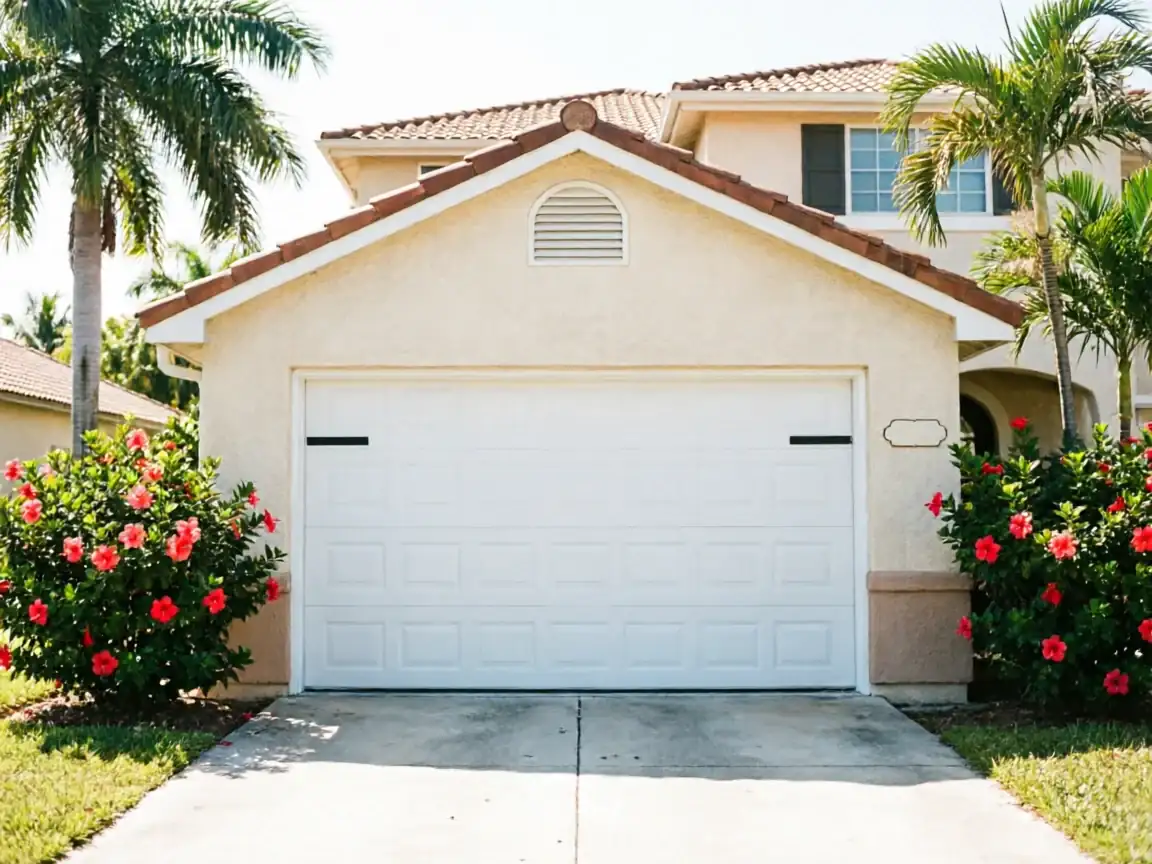
Wellington's housing stock runs younger than most of the service area we cover out of Boynton Beach. The wider area has a median build year of 1977, with a lot of 1960s and '70s construction still standing. Wellington's median is 1995 - the neighborhood came up nearly two decades later, during a different building code era and with different standard hardware.
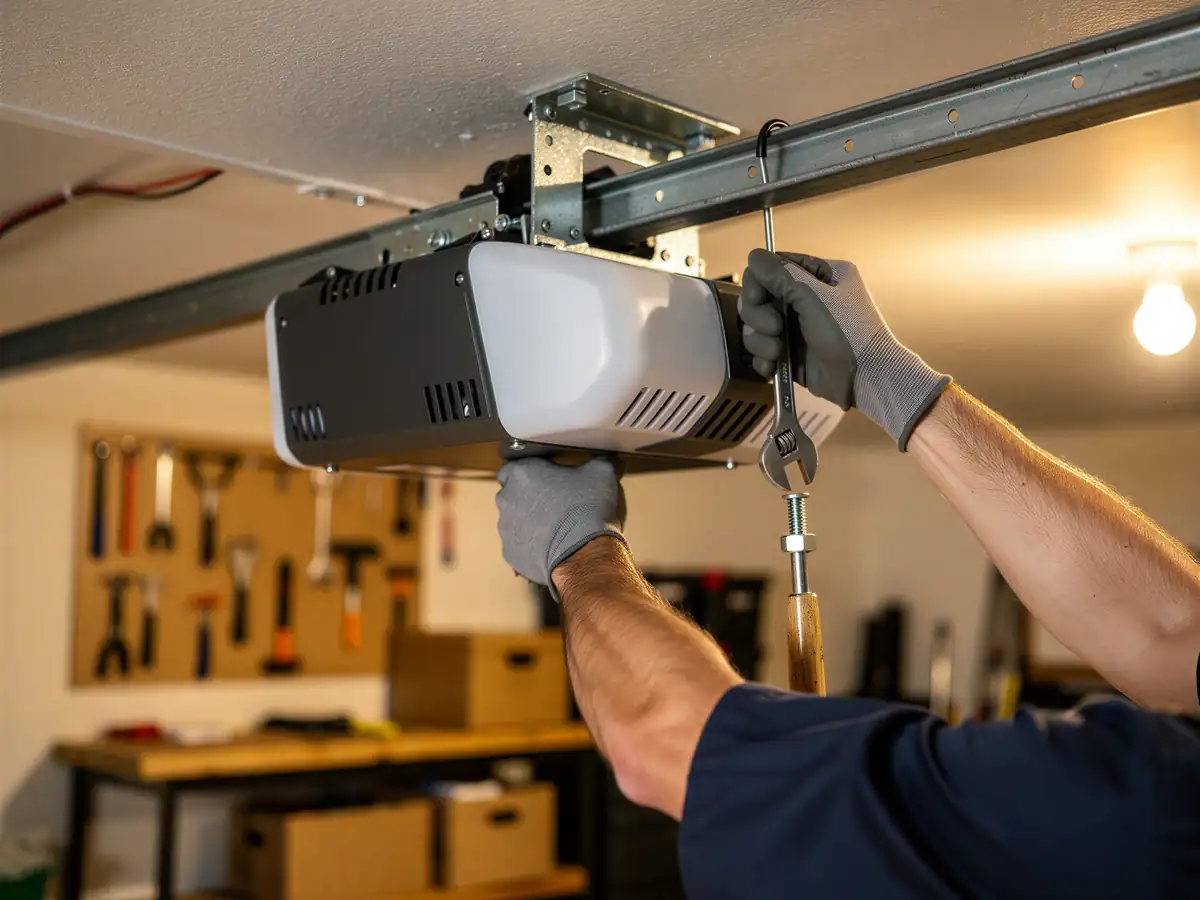
That matters for the actual repair. Doors built in the mid-90s almost always shipped with torsion spring systems rather than the older extension-spring setups common on 1970s houses, and openers from that era were already required to carry photo-eye safety sensors. So when we get a call from Wellington, the fix usually centers on torsion spring replacement, cable wear at the drum, or a photo-eye that's drifted out of alignment - not the extension-spring and pulley failures we see more often on the older housing stock closer to Boynton Beach itself.
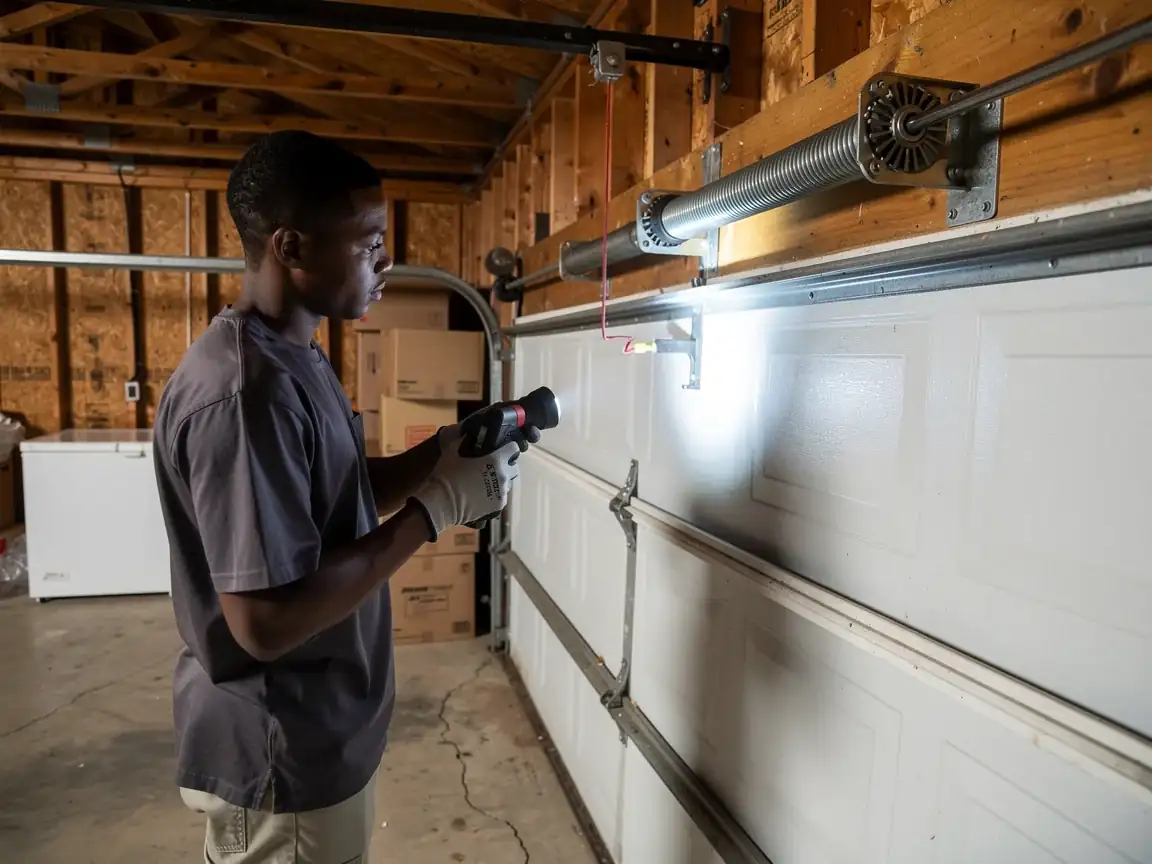
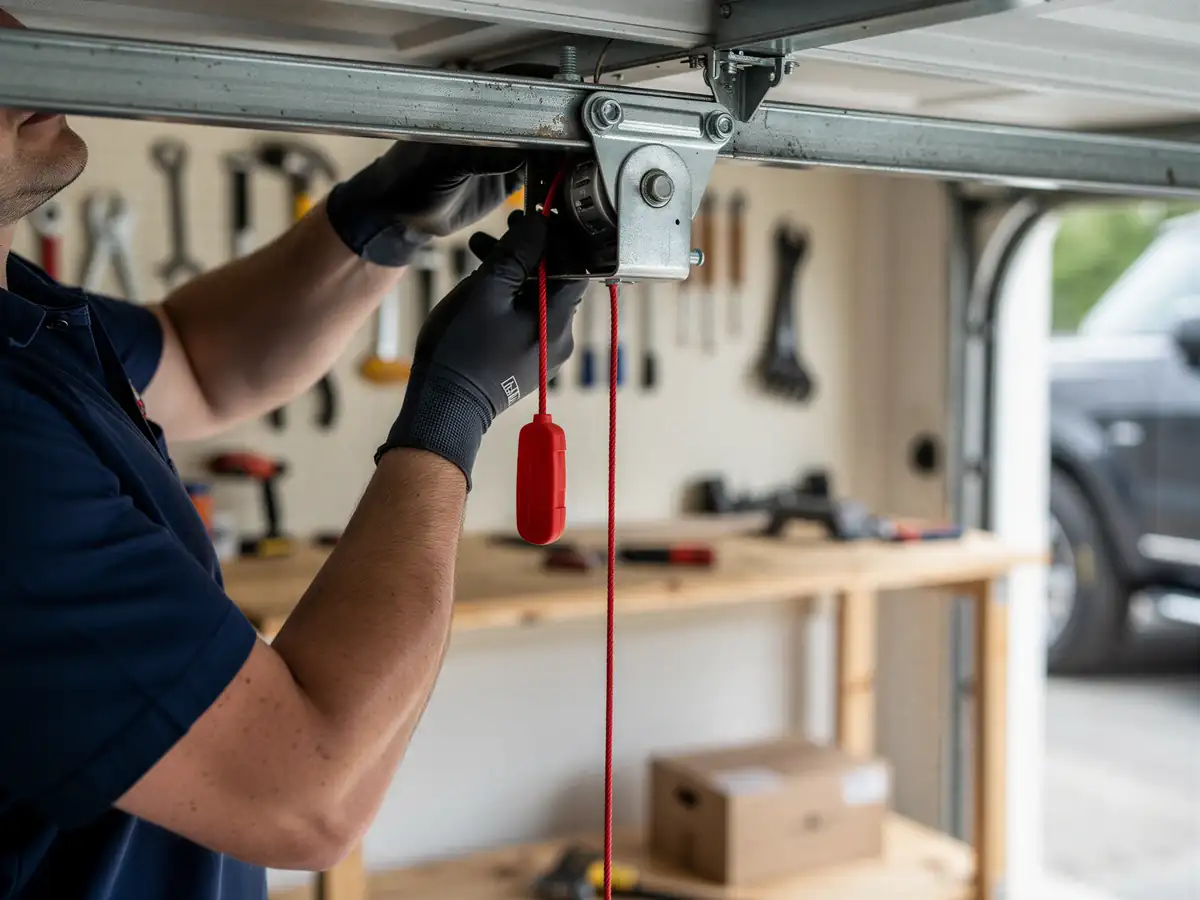
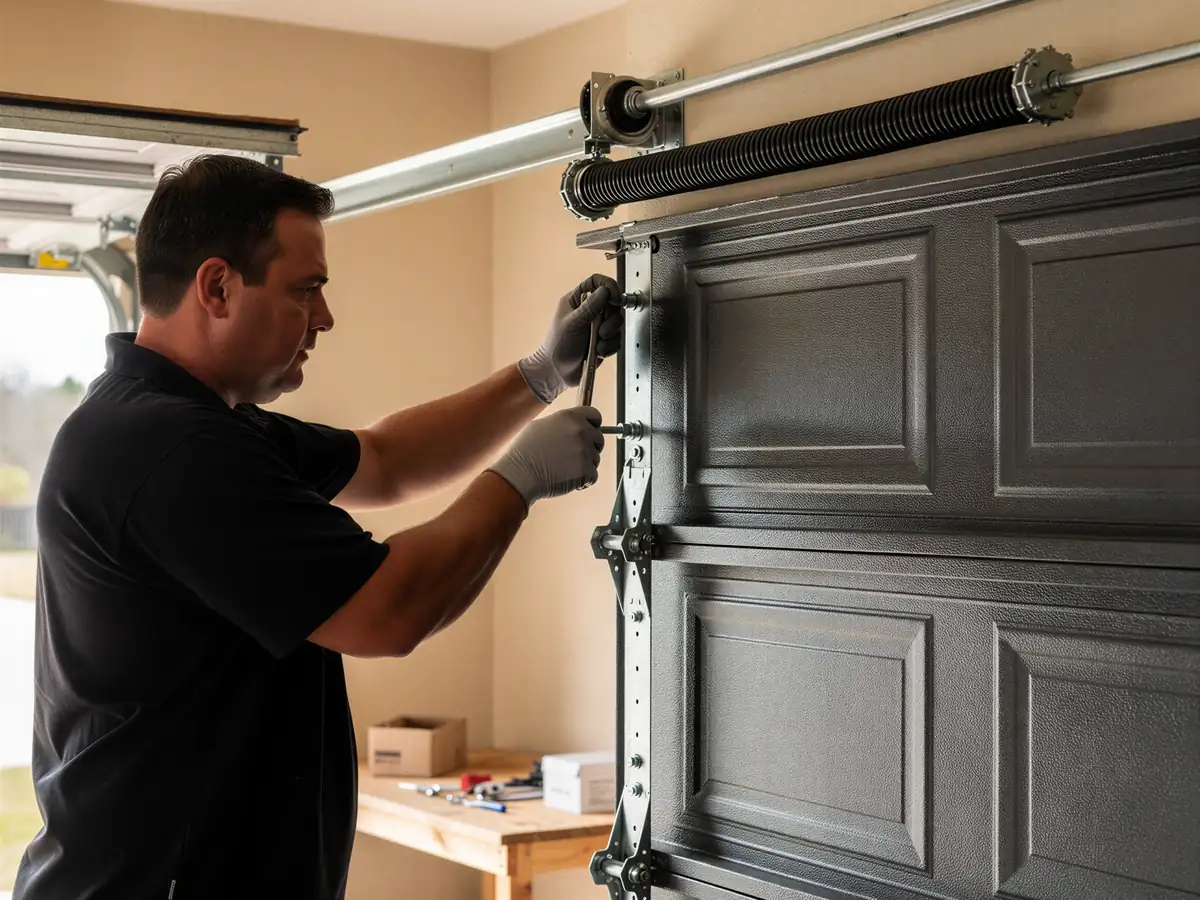
We measure the spring by wire size, coil diameter, and door weight before we touch anything. Guessing a spring size on a torsion system is how a tech gets hurt or the door ends up unbalanced, slamming down on one side.
Doing It Yourself
A torsion spring is wound under several hundred pounds of tension, and on a standard double door it takes two matched springs working together. We don't recommend homeowners replace these themselves - the winding bars and the force involved aren't forgiving, and it's not a job where a mistake just means redoing it.
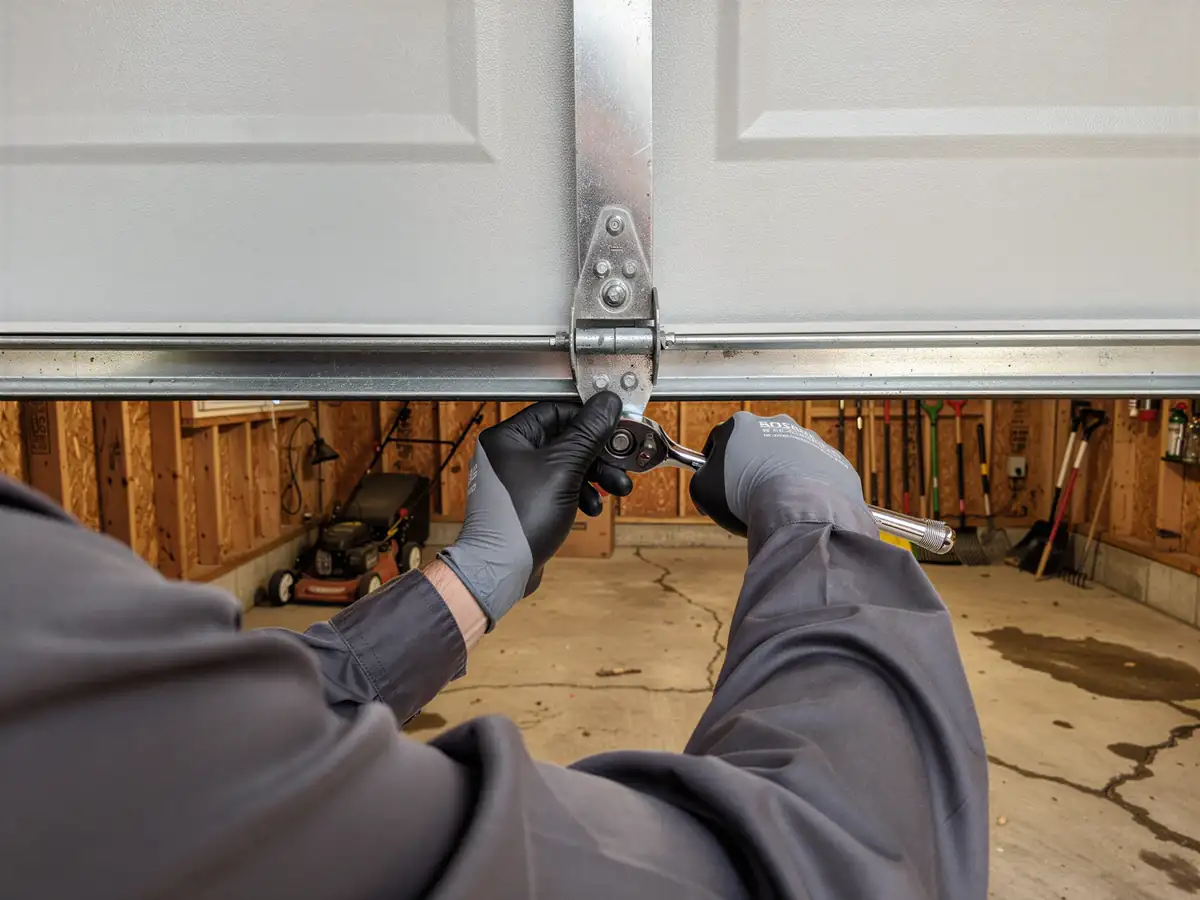
What you can check yourself: the photo-eye sensors near the bottom of each track. If your door reverses before it touches the floor, or won't close at all, wipe both lenses with a dry cloth and make sure nothing - a bike, a storage bin - is blocking the beam between them. Loose brackets will also throw the alignment off after years of vibration; a lot of 1995-vintage doors are hitting that point now.
Beyond that, we'd rather you call than take a torsion spring apart on a ladder. It's one of the few repairs where the honest advice is: leave it to someone with winding bars and clamps rated for the job.
The Symptom
The most common call we get from this part of the service area is a door that reverses halfway down
Or won't close at all and just sits there blinking the opener light. On a home built in the mid-90s, that's almost always the photo-eye sensors - either misaligned from years of settling, or the lenses are dirty or knocked out of position.
The second most common symptom
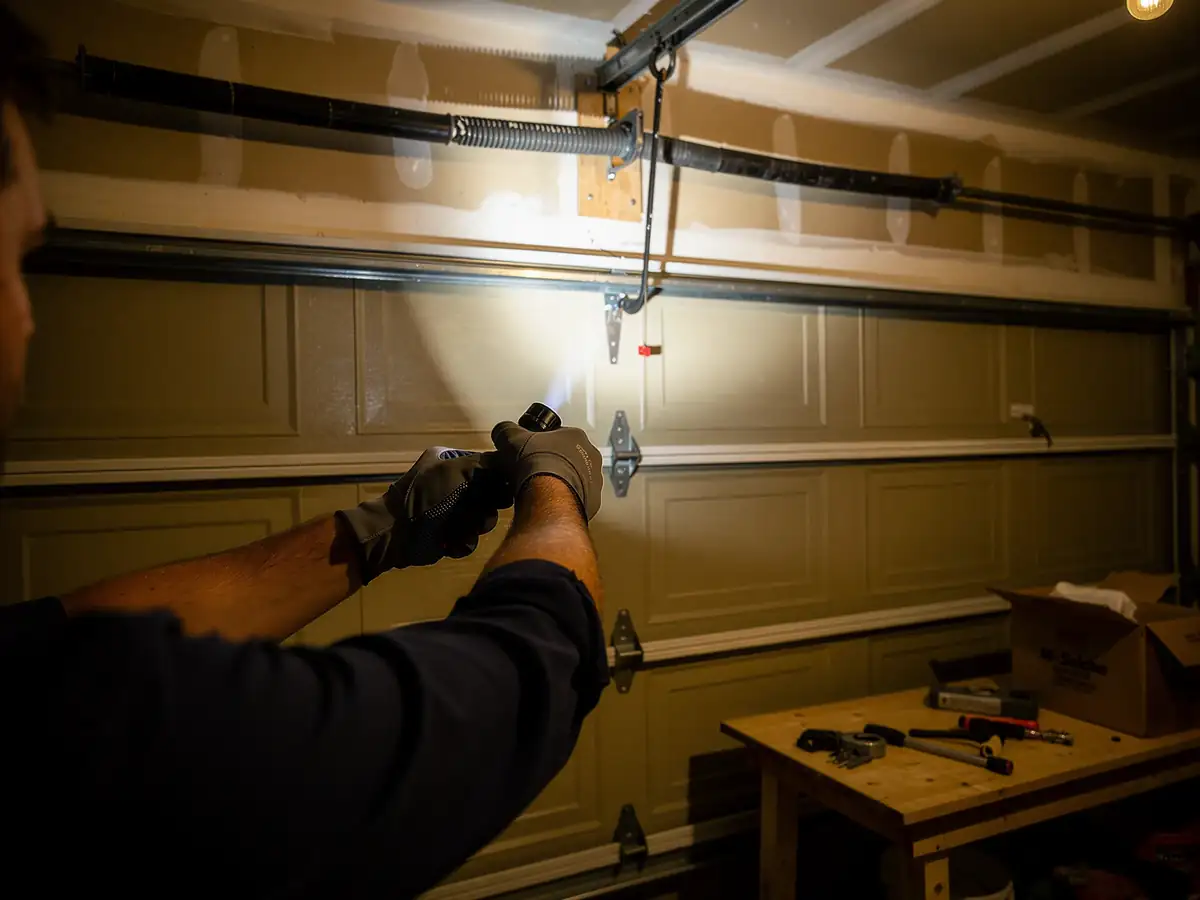
A door that's noticeably heavier to lift by hand, or an opener that strains and groans before the door moves. That points to a torsion spring losing tension, which on a 1995-era door means the original spring is close to 30 years old and past where it should still be trusted. Torsion springs don't last forever regardless of how well the door was built, and a door that age is right in the window where they start to fail.
- 30 years
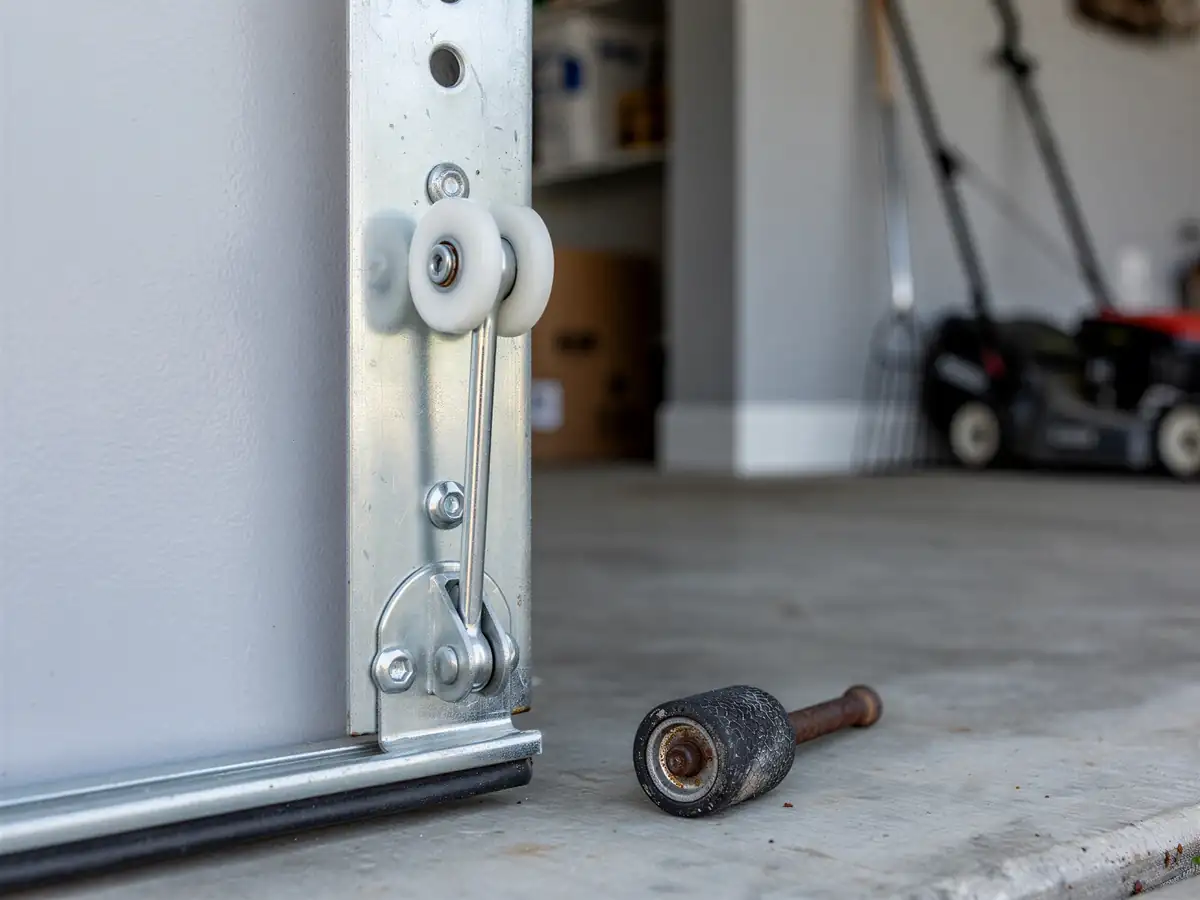
Less often, we see worn rollers causing a door to shudder or jump in the track
More a maintenance issue than a safety one, but it accelerates wear on the cables if left alone too long.
Why It Happens Here
Wellington's homes clustered through a build boom that put the median around 1995, which means a large share of the doors and openers in this part of the service area are now entering their late-20s to early-30s - right where torsion springs, rollers, and photo-eye brackets start failing on a predictable schedule, regardless of how well the house was built.
The climate here is mild temperate rather than extreme, so Wellington doors aren't fighting the freeze-thaw cycles or heavy snow load that shorten hardware life elsewhere in the country. What wears springs and cables out here is simpler: years of daily cycles, humidity around the coil, and UV exposure on painted steel panels. It's slower than storm damage, but it adds up the same.
We come out to Wellington from Boynton Beach, about 14 miles away, so a repair here is a scheduled trip rather than a walk-in - we bring the right spring sizes based on what we hear about the door over the phone, which is why giving us the door's age and whether it's single or double helps us show up with the right parts the first time.