What the Fix Involves
Wellington is a 14-mile drive from our shop in Boynton Beach, which changes how we run a call here compared to a job five minutes from the yard. We don't stock a van with every bracket and every logic board hoping something fits - we ask what's on the door now (chain, belt, screw drive, the mounting height of the rail) during the call, then load the specific opener and the matching safety sensors before we leave. That one extra step up front saves a second trip, which matters more at 14 miles than it would at two.
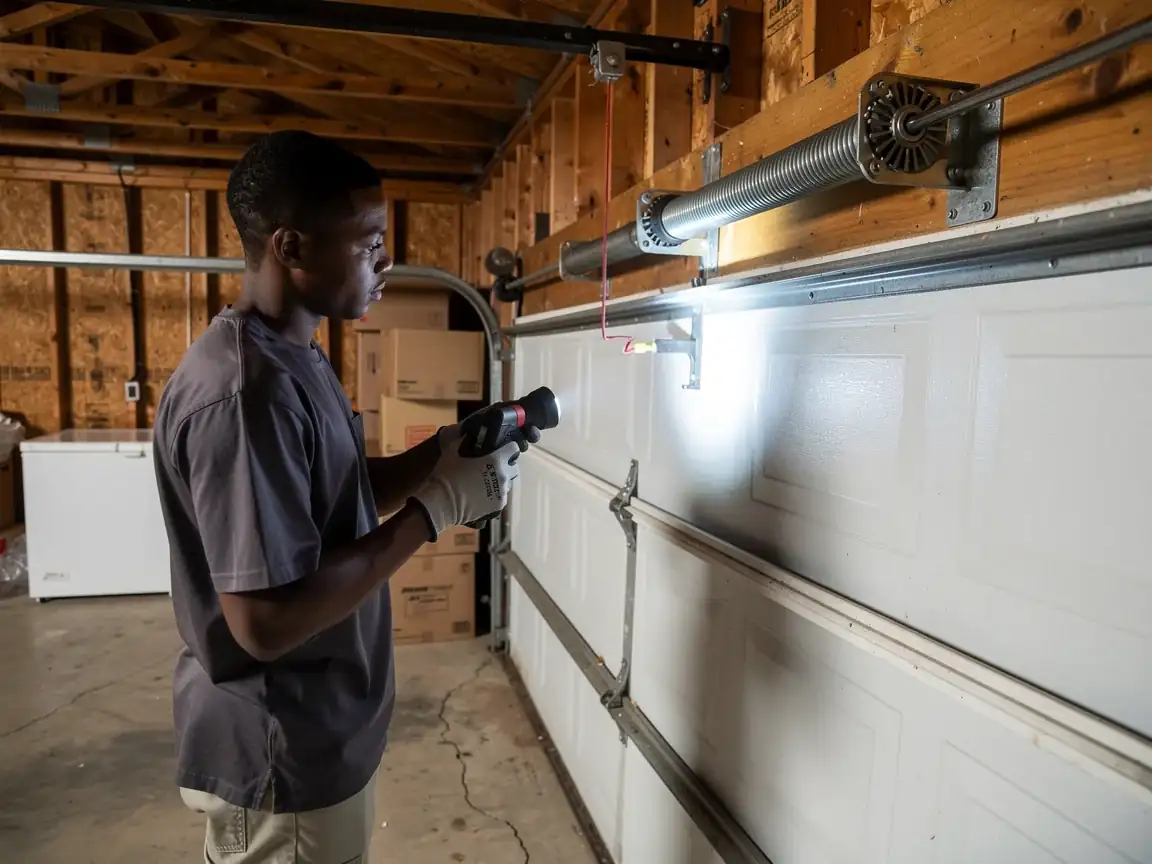
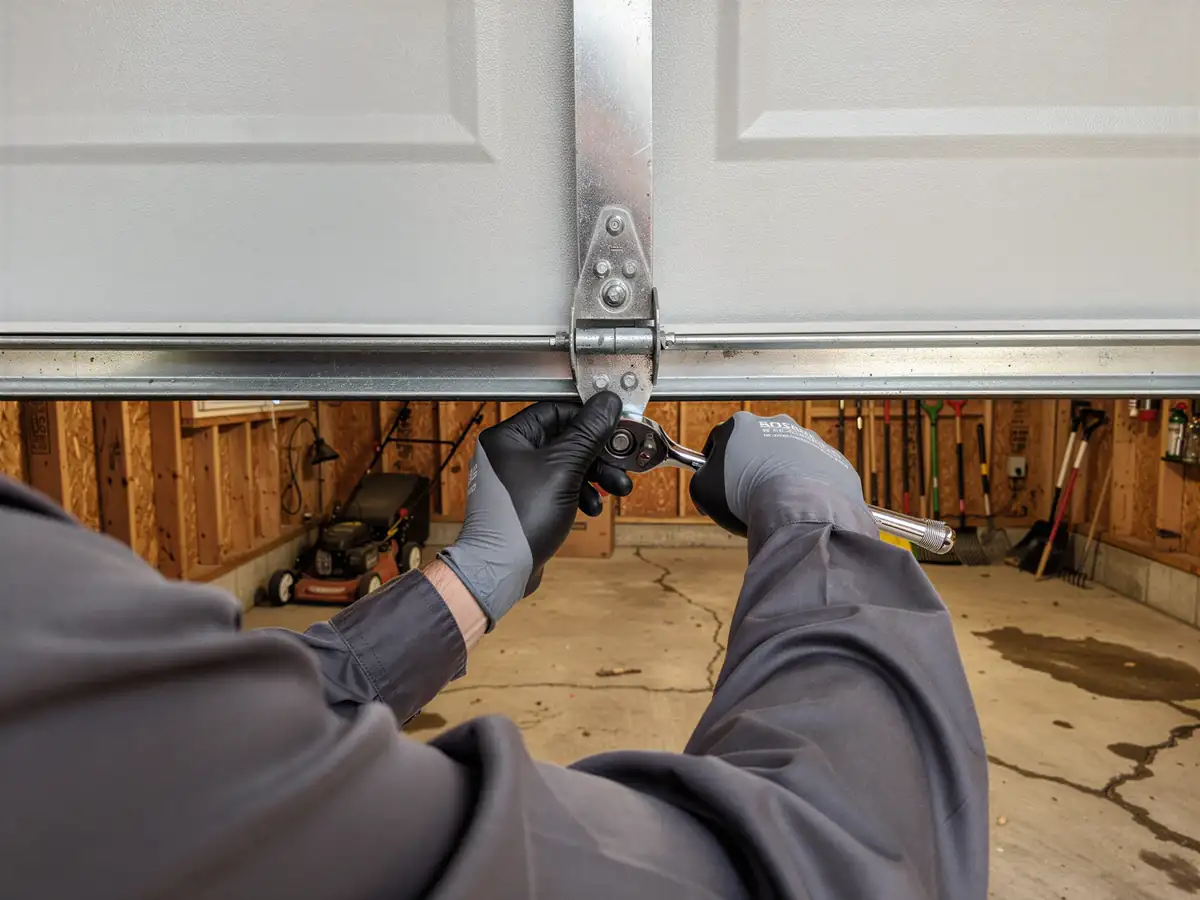
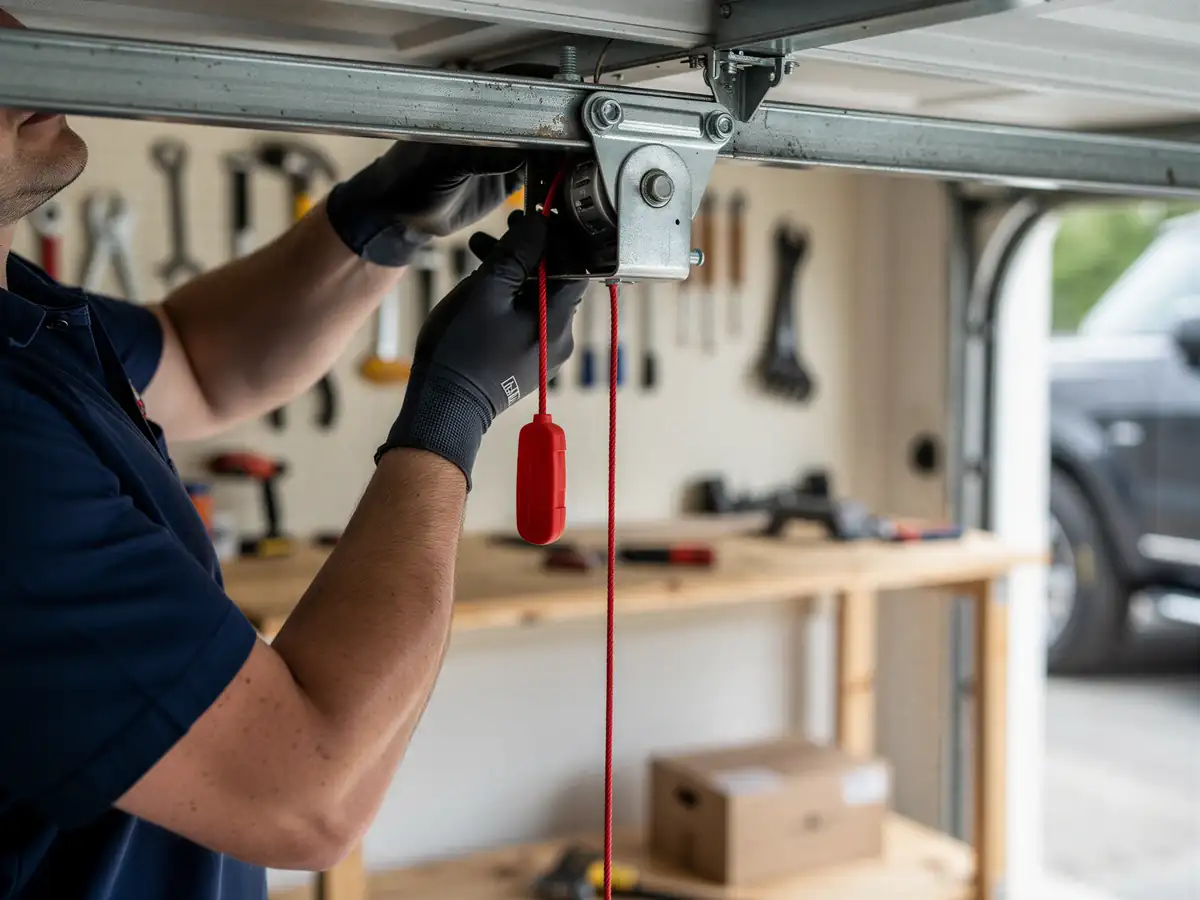
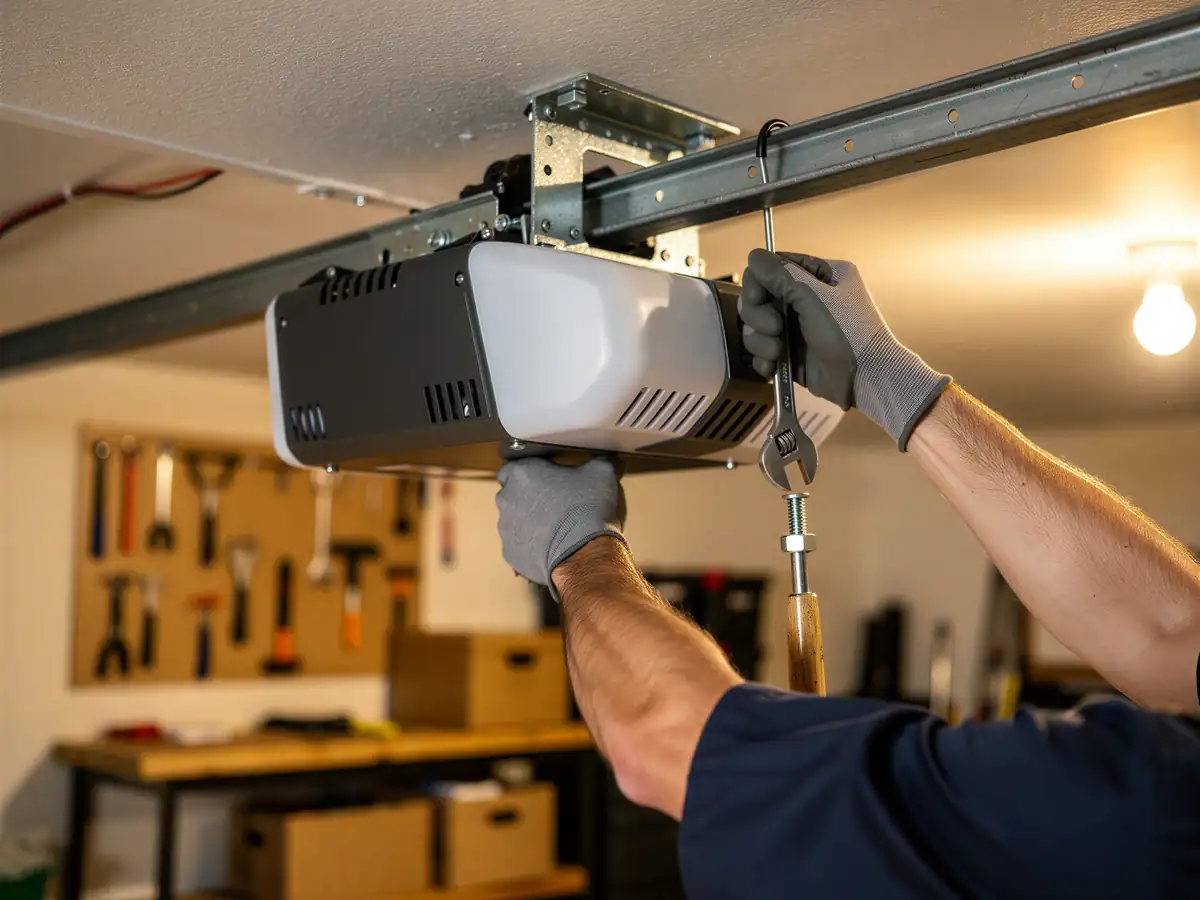
Once we're on site, the install itself is standard work: mount the head unit, run the rail, set the travel limits, pair the sensors at the base of the track, and program the keypad and any remotes. What takes longer in a neighborhood like this is matching the opener's horsepower and drive type to a door that's often larger and heavier than the stock we see on older houses closer to Boynton Beach - Wellington's housing mostly went up around 1995, well past the double-door-as-standard era, so the openers need to be sized for it, not just swapped like-for-like.
Doing It Yourself
A homeowner handy with a drill can mount a bracket. The part that trips people up on a newer build like the ones common in Wellington is the electrical side - a dedicated outlet or a GFCI circuit feeding the garage, and in some cases a different run than the builder left for the original unit. Get the mounting height wrong on a mid-90s door and the travel limits won't set cleanly, so the opener either won't close fully or reverses on nothing.
We're honest that the mechanical half of this job is doable for someone patient. Where we draw the line is the safety sensor alignment and force settings - if those are off, the door can keep closing against something in its path, and that's not a setting to guess at. If you want to do the mount yourself and have us handle sensor calibration and programming only, say so on the call; it's a smaller job for us to show up for, and the 14-mile trip is the same either way, so it's worth bundling it with anything else the door needs.
The Symptom
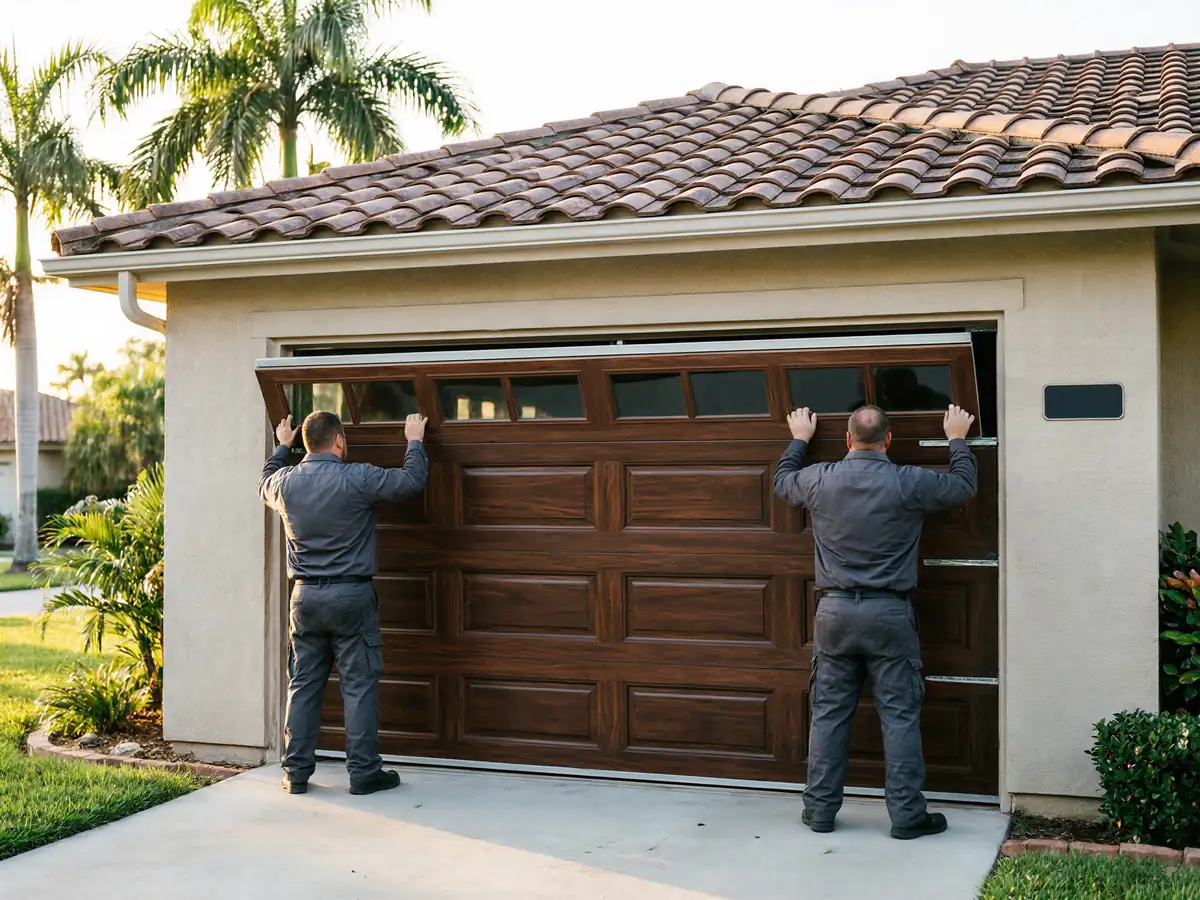
The calls we get out of this area are less often "the opener died" and more often "it's doing something weird." A door that reverses halfway
A remote that works from the driveway but not from inside the car, a keypad that stopped taking the code after a power blip. On homes built in the mid-90s, these symptoms usually trace back to the opener's logic board or its sensor wiring, not the door itself, since the doors and tracks from that era are generally in decent shape still.
That's different from what we see on the older housing stock closer to Boynton Beach
Where the door hardware itself is often the problem and the opener is almost incidental. Here, Florida's mild coastal climate hasn't stressed the mechanical parts the way harsher regions would, so when something fails, it's usually the opener's electronics or the sensor alignment - not rust, not warped track, not spring fatigue from heat cycling.
Why It Happens Here
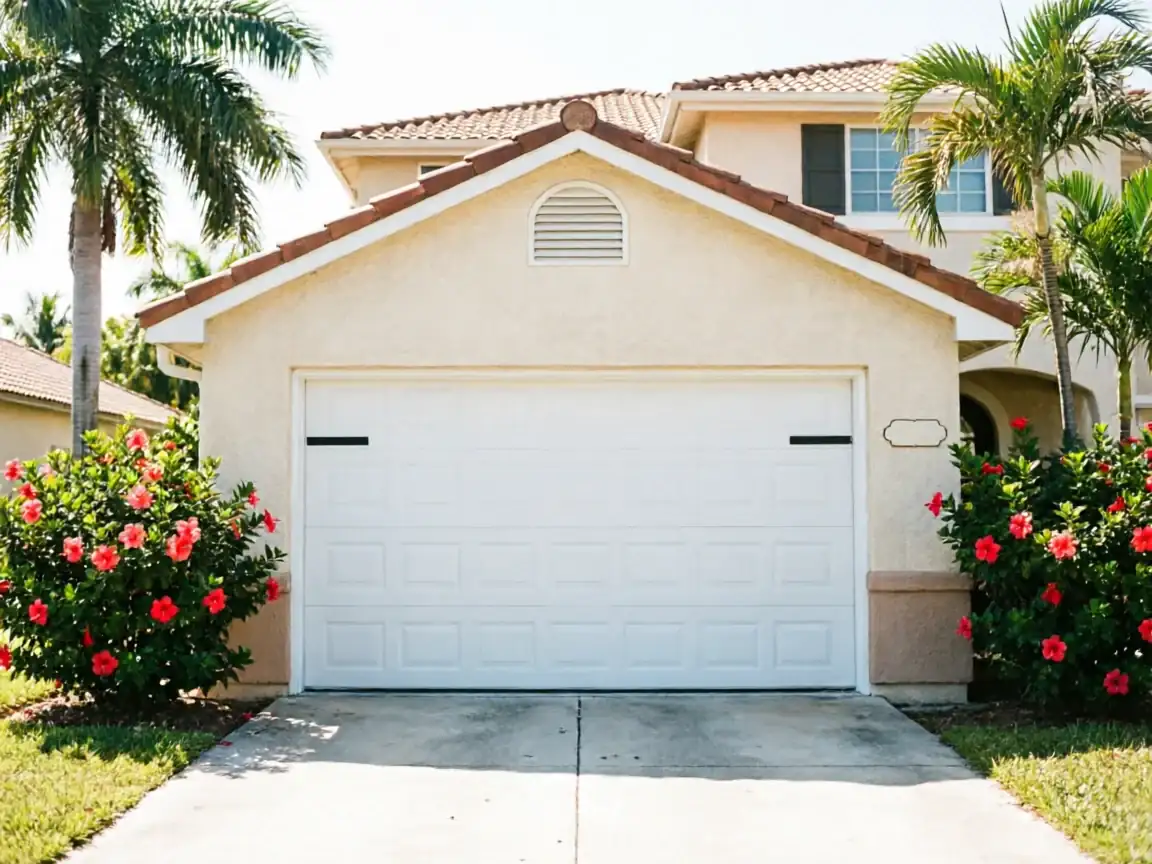
Wellington's housing stock is newer than a lot of what this company covers - built mostly around 1995, compared to the 1965-2005 range (median 1977) across the broader service area. That later build date means most of these garages came with an opener already installed from the factory, often a chain-drive unit that's now reaching the end of its service life at the same time across a lot of houses built in the same stretch of years. When one opener in a development starts failing, we often get calls from a few streets over within the same season.
The area's household income, noticeably higher than the regional median, also means more owners are replacing rather than patching - choosing belt-drive units for quiet operation or units with battery backup, rather than the cheapest like-for-like swap. We bring both, and we'll tell you honestly which one fits your situation instead of upselling the quieter option if the basic chain drive will do the job.