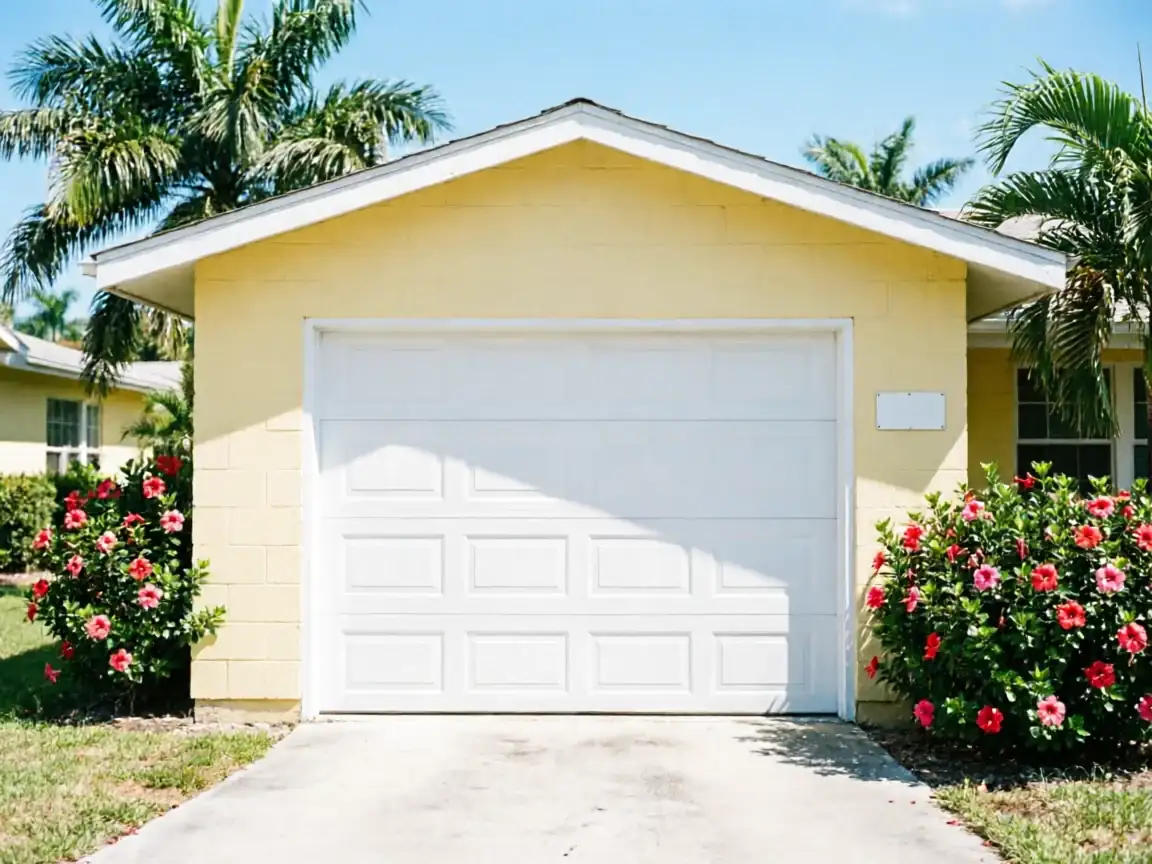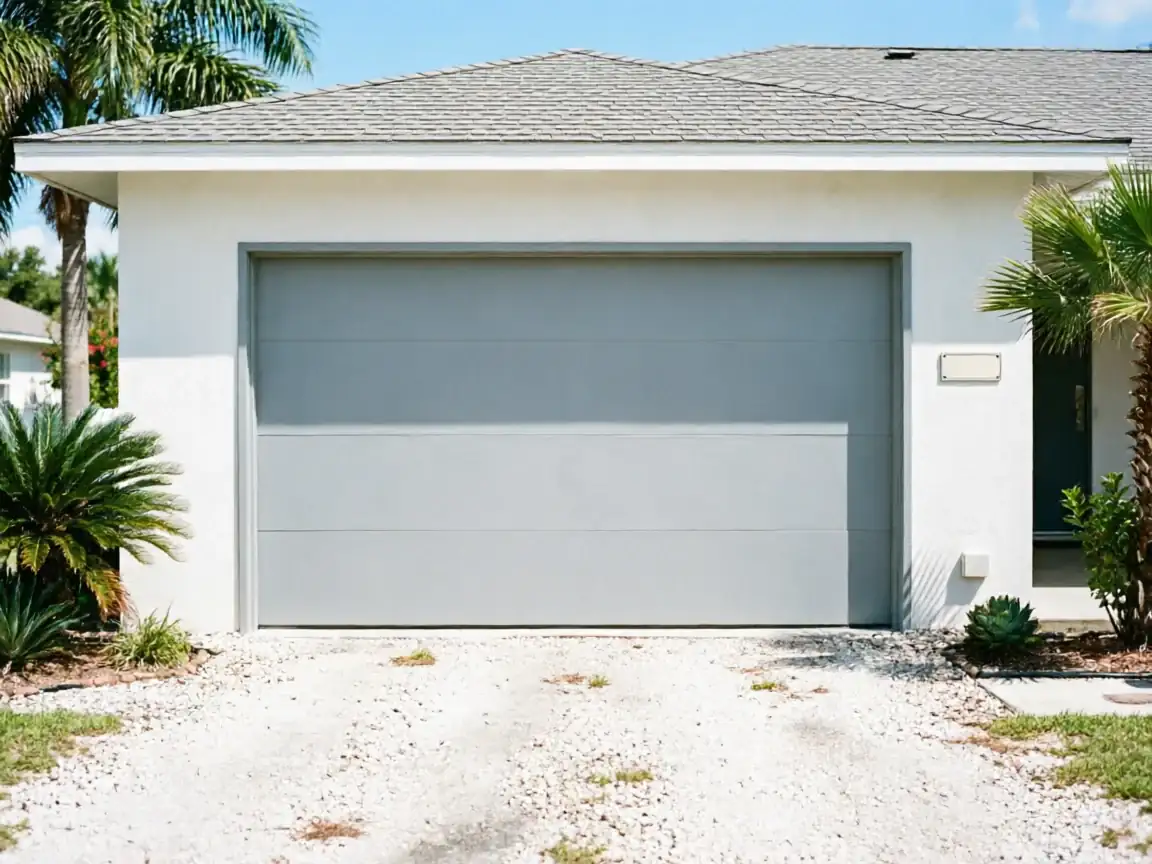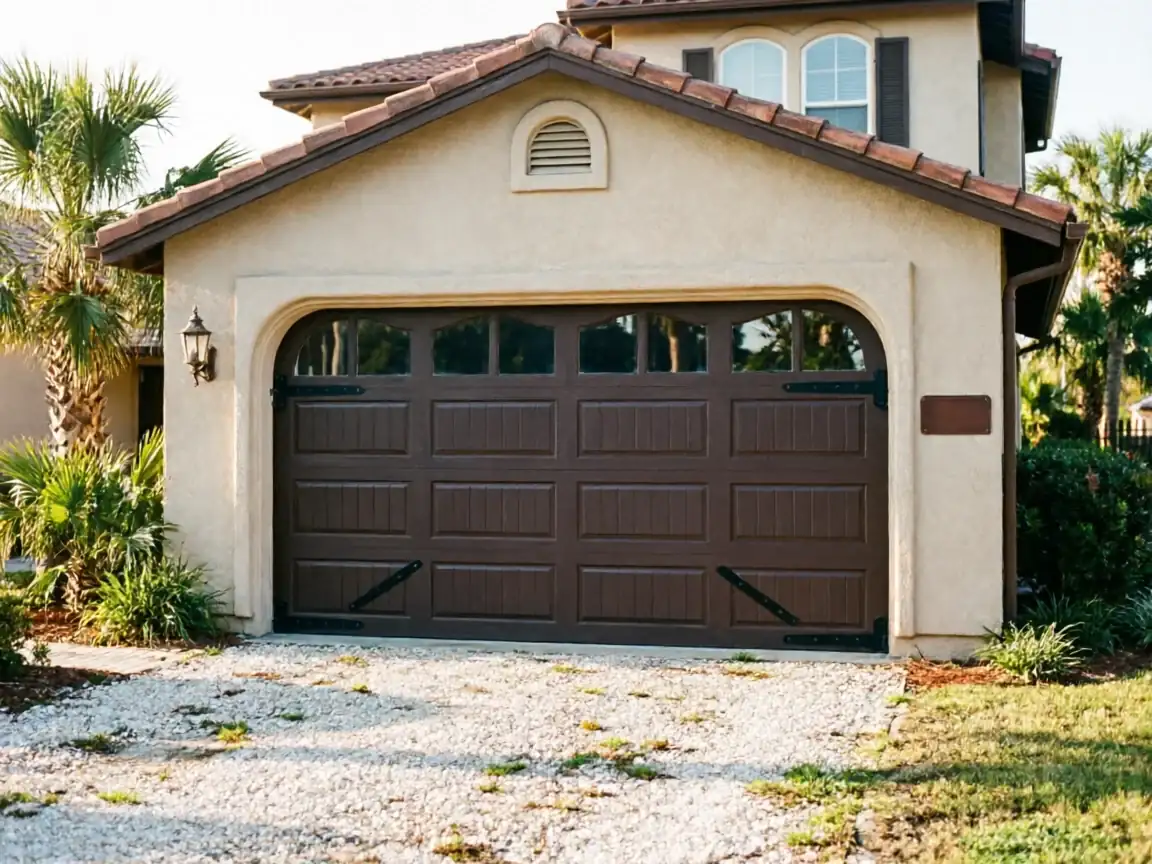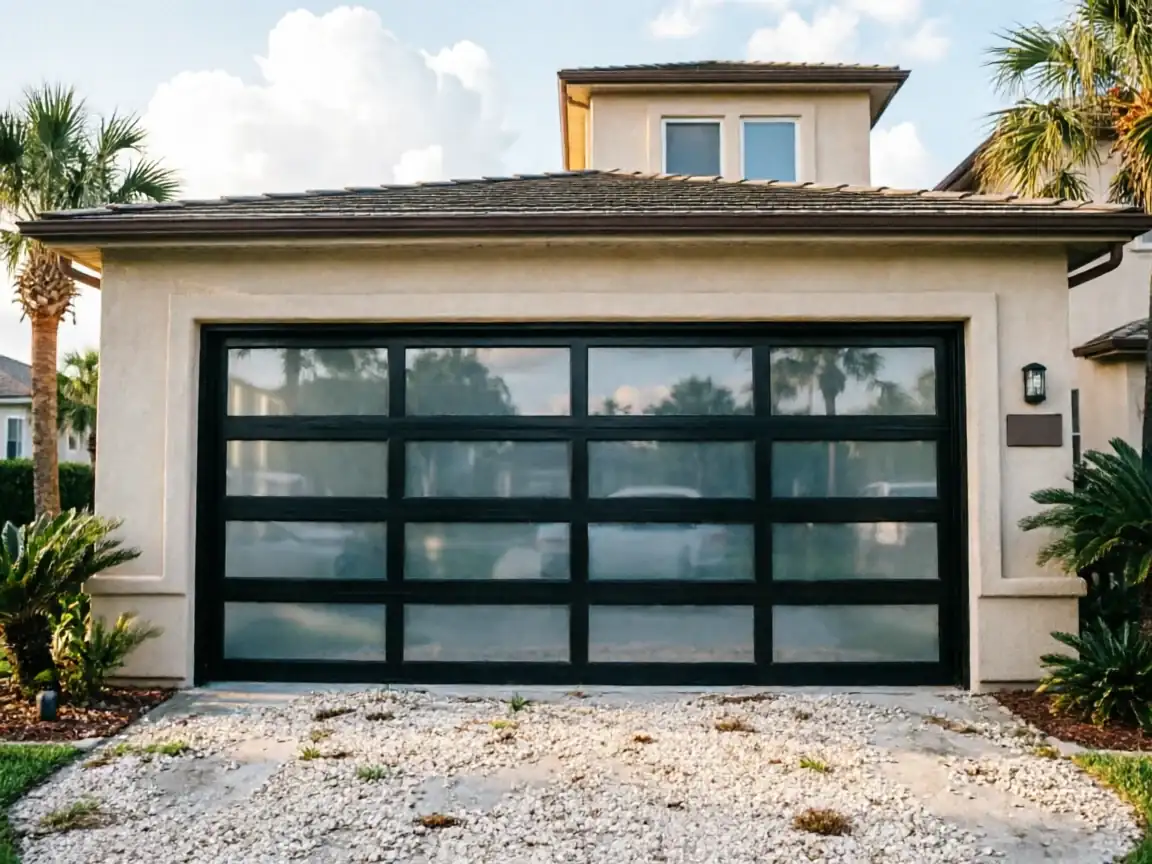
What the Fix Involves
Most houses in Wellington went up around 1995, which puts this town about two decades newer than much of the rest of the service area, where 1960s and 70s stock is still common. That matters because a 1995-built house almost never had its garage door touched since the builder hung it. The track, the hinges, the end bearing plates, and very often the opener itself are all original to the house.
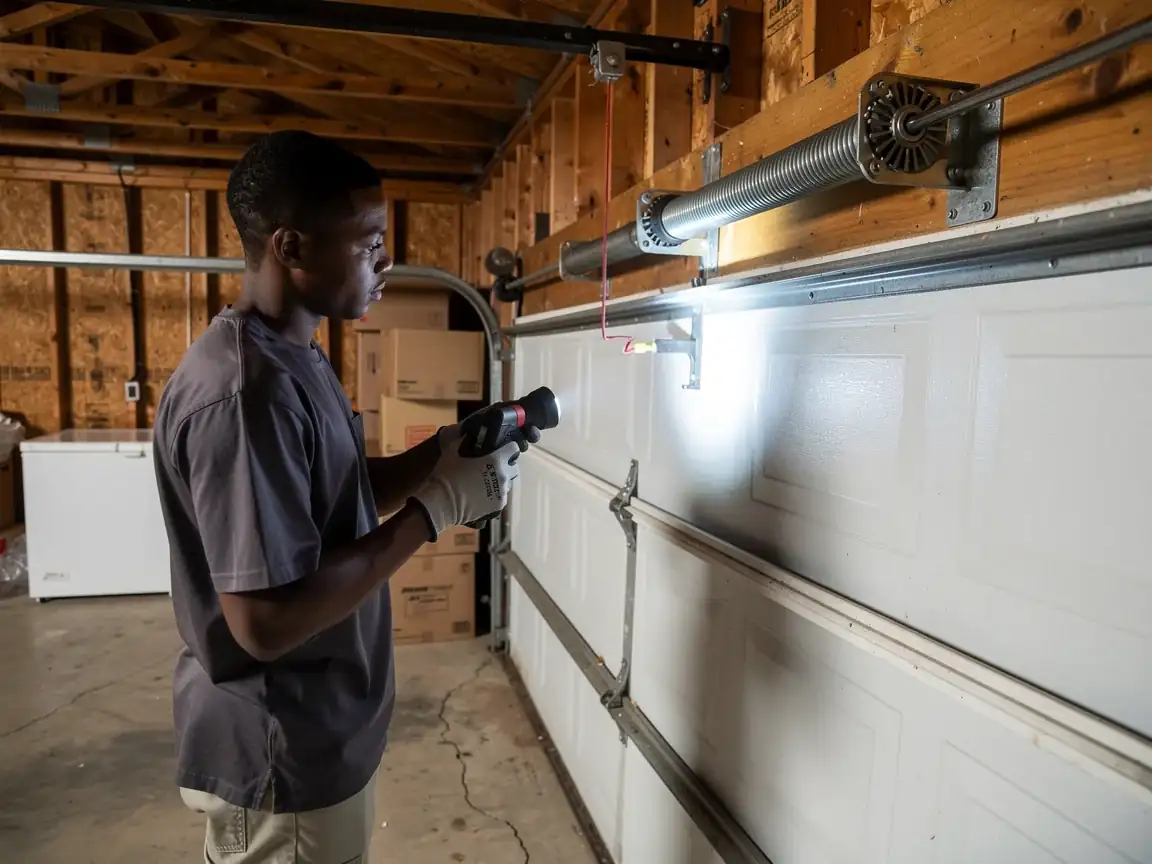
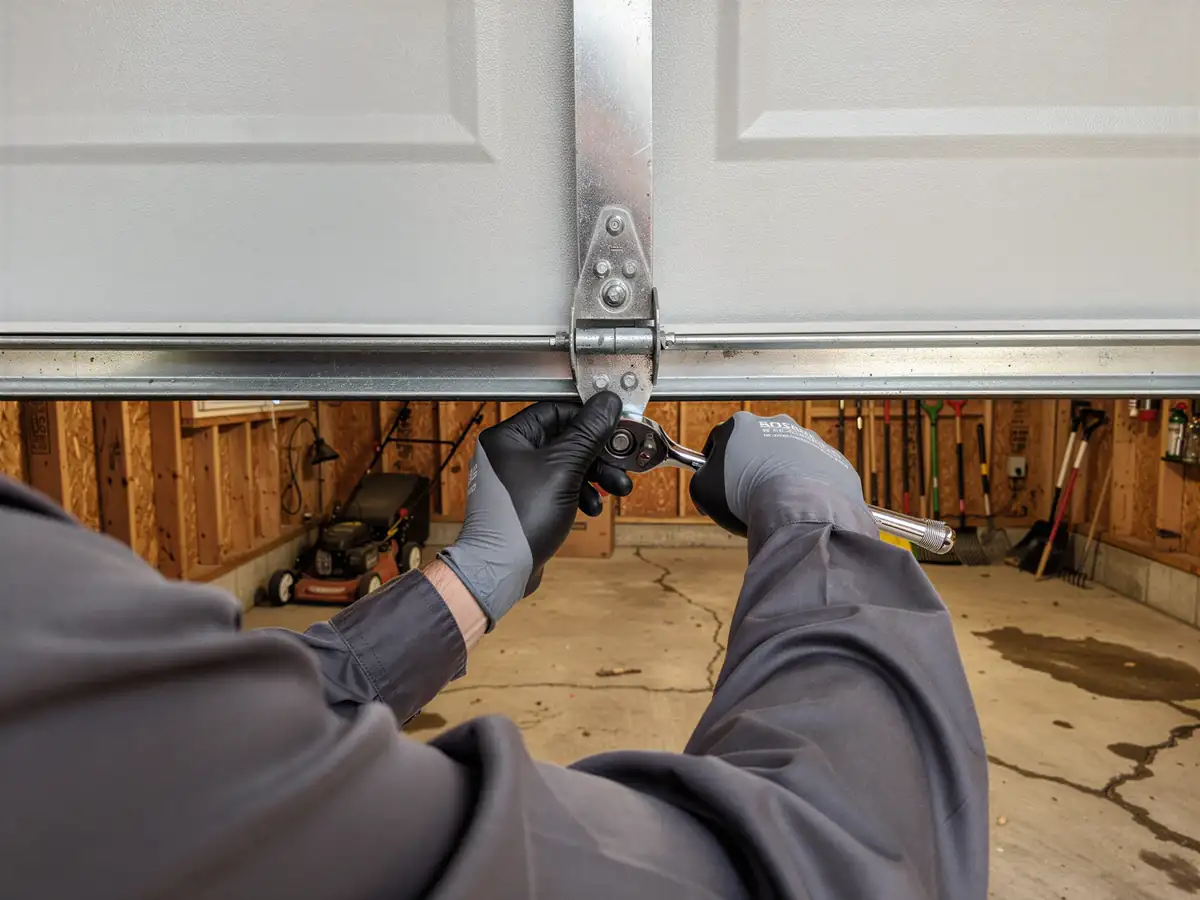
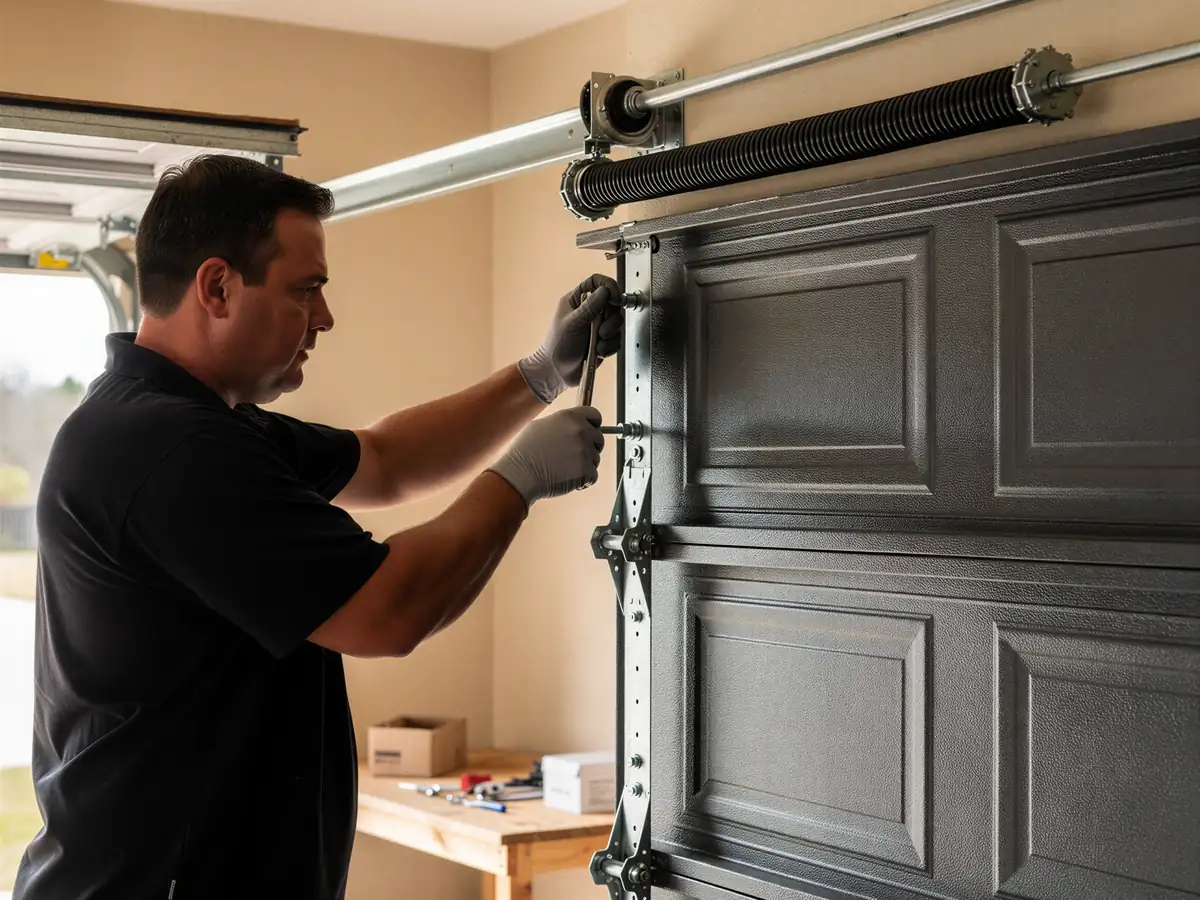
A new install here isn't just swapping a panel. We pull the old track and hardware out entirely, check the header for rot or settling, and set new jamb brackets square before the door goes up. On a house this age the wood framing around the opening is usually sound, which simplifies the job, but the lift cable drums and the torsion spring almost always need replacing even if the door panel itself still looks fine. We size the spring to the door's actual weight rather than reuse what's there, since 1990s builders often under-speced hardware to save a few dollars per house.
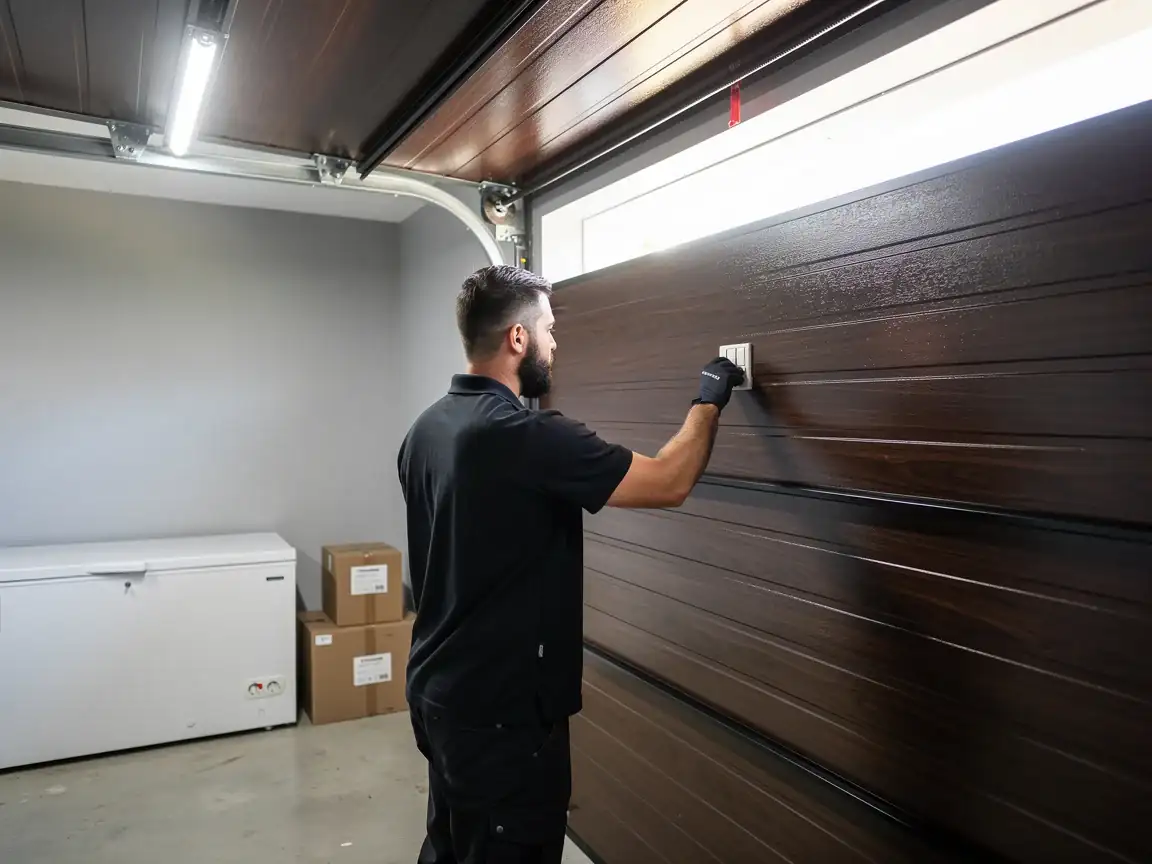
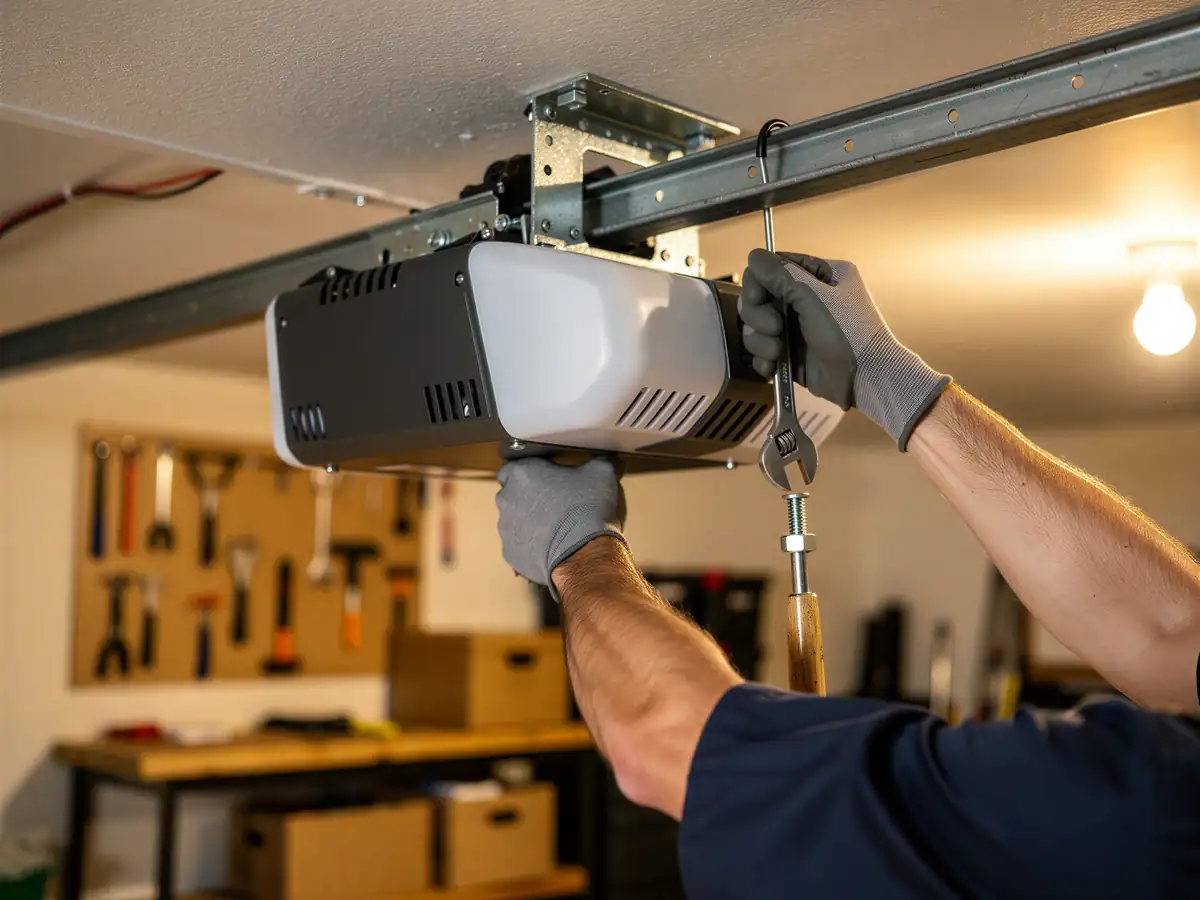
We also swap the opener in most of these jobs. A 1995 chain-drive unit has no battery backup and no rolling-code security, both standard on anything sold today.
Doing It Yourself
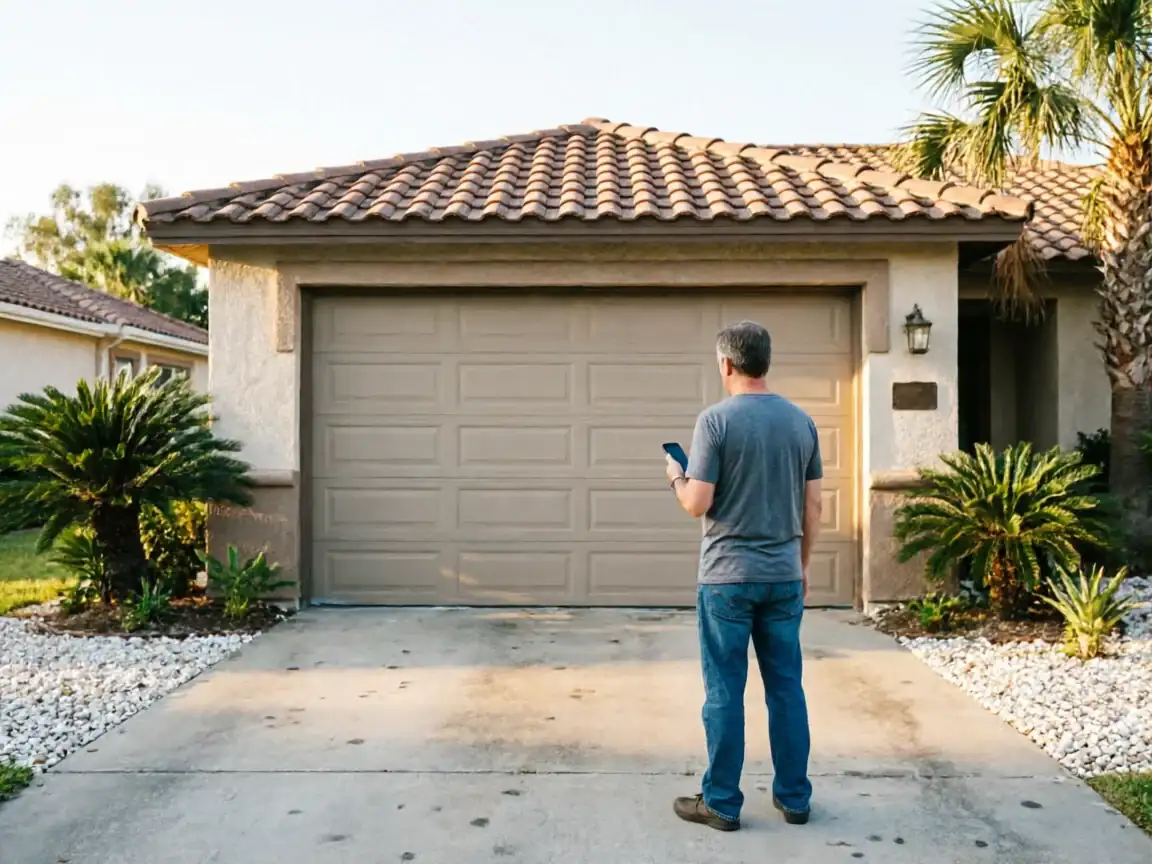
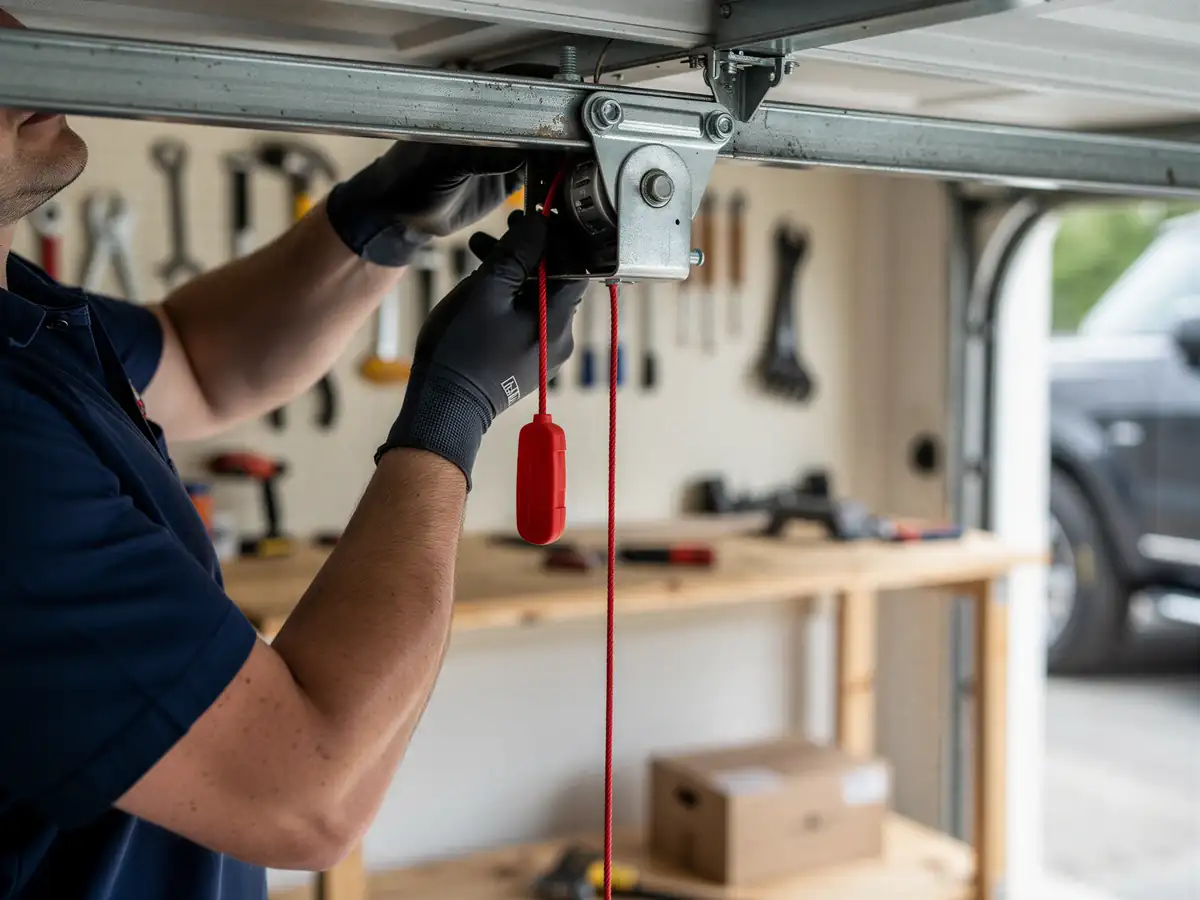
Mild coastal temperatures mean Wellington doors don't need the heavy insulation packages some northern climates demand, so the material choice is mostly about weight, wind rating, and looks rather than R-value. That said, we don't recommend DIY on the spring and track portion of this job. A torsion spring under full tension can take a hand off, and on a house this age nobody can tell you from the driveway whether the spring was ever replaced or is still the builder-grade part from 1995.
Where a homeowner can reasonably do their own work is cosmetic: repainting an existing door, swapping out plastic end caps, or replacing a keypad. Panel and spring work is not a weekend project, and we'll say plainly that a door bought and installed by someone without the right bar and winding cones is how most garage door ER visits happen. If you want to save money, get quotes on the door material and skip the labor shortcuts, not the other way around.
One honest limitation: wide custom sizes or heavily insulated steel doors sometimes have to be special-ordered, and that lead time is set by the manufacturer, not by us.
The Symptom
The most common call we get out of Wellington isn't a door that won't open at all
It's a door that's gotten noticeably heavier to lift by hand, or an opener that strains and reverses partway up. Both point to a spring that's lost tension, which on a 1995-era door is right on schedule. Torsion springs are rated for a number of cycles, not a number of years, but a door installed when the house was built and used daily for thirty years is well past where most springs are engineered to hold.
A second pattern: openers that run but don't fully seat the door, leaving a gap at the bottom
On many of these houses that's the original chain-drive unit finally giving out, not the door itself. We see this often enough in Wellington specifically that when a homeowner describes it over the phone, age of the house usually tells us more than anything else before we've even looked at the door.
Why It Happens Here
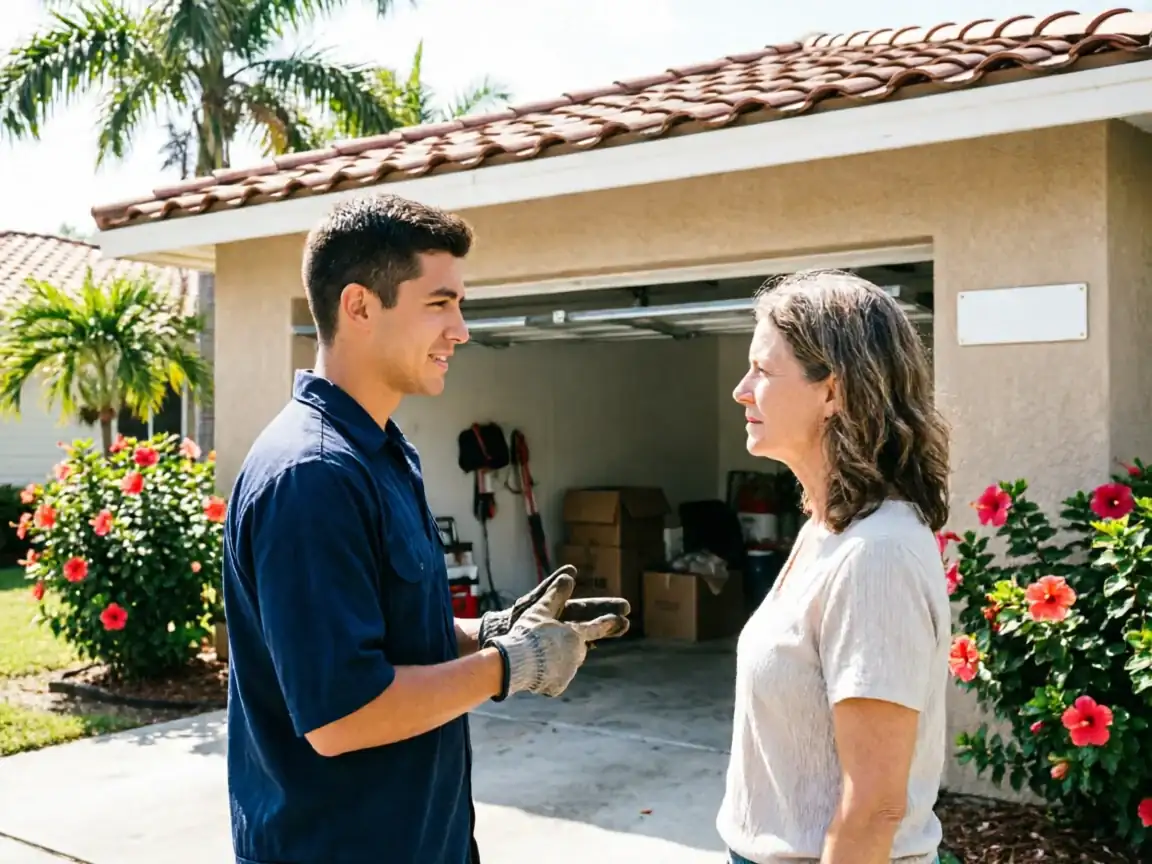
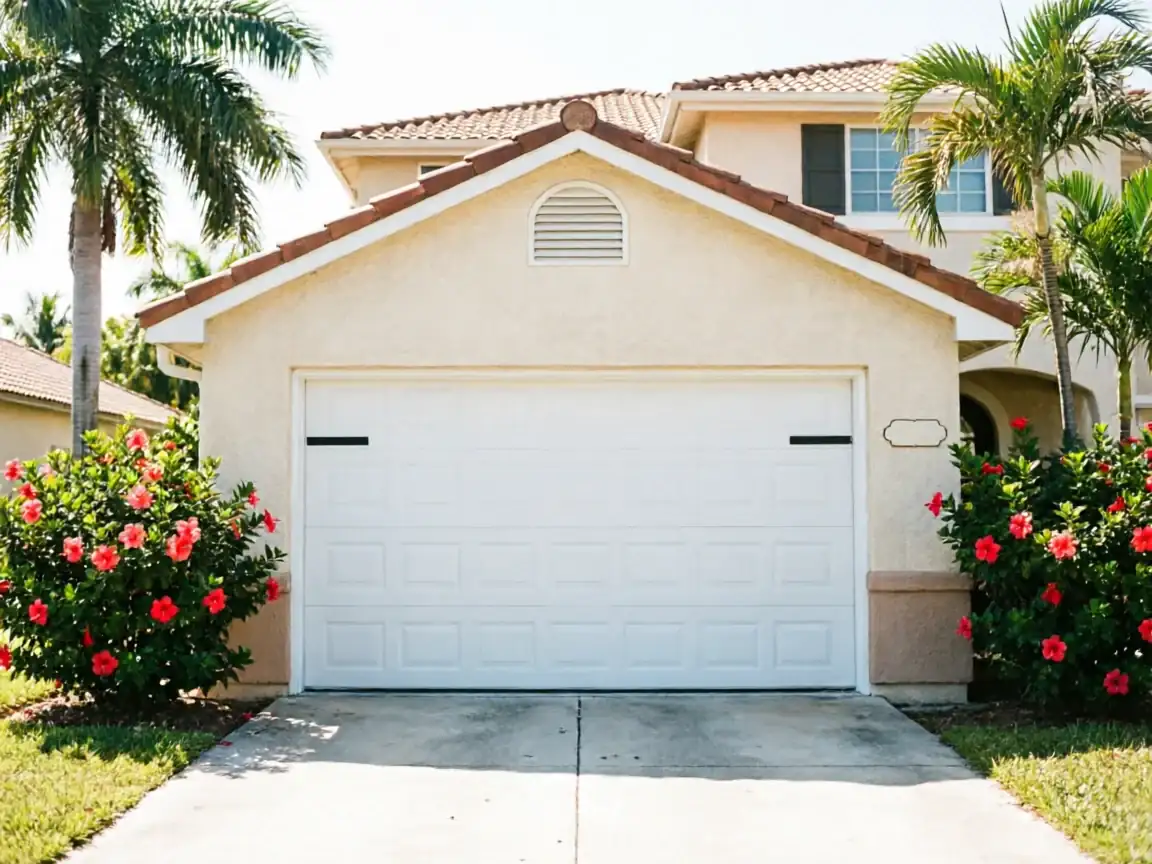
At 14 miles from Boynton Beach, Wellington sits toward the far edge of the routes this crew runs, which is worth knowing if you're expecting a same-day callback window - we schedule it, we just don't promise the shortest drive in the area. Wellington's median household income of $110,294 runs well above the $92,325 median across the wider service area, and that shows up in the doors we're asked to quote here: more insulated steel, more custom window layouts, fewer bare single-layer panels than we see closer in.
With roughly 21,604 households built mostly in the same mid-1990s window, a large share of Wellington's original door hardware is aging out on a similar timeline. We're not describing a town full of broken doors - the mild climate here is kind to garage door hardware compared to places with real freeze-thaw cycles - but original springs, cables, and chain-drive openers from a house built in 1995 are now at the point where failure isn't a question of if, it's when. See our installation overview for how we price and schedule the job, or check areas near Wellington we also cover.